Ageratina altissima (White Snakeroot)
Ageratina altissima (White Snakeroot)
Wholesale to the Trade - Please log into your business account.
Wholesale to the Trade - Please log into your business account.
Couldn't load pickup availability
One of the most reliable late-season nectar sources for native bees, white snakeroot fills a genuine gap in shaded woodland-edge restoration plantings, where few other natives are still blooming into October.
Species Overview
Ageratina altissima, commonly known as White Snakeroot, is a perennial herb native to eastern and central North America that grows between 1 and 4 feet tall. It features broad, serrated leaves and clusters of small, fluffy white flowers that bloom from late summer into fall, often persisting past the first frost. It spreads by rhizomes and is a prolific self-seeder, readily naturalizing in shaded and partially shaded sites.
Application
- Woodland edge and understory restoration, including dry shade
- Late-season pollinator habitat - particularly valuable for native bees
- Naturalized plantings along streams and in recently disturbed shaded sites
- Shade garden plantings prioritizing extended fall bloom
Growing Conditions / Specification Data
- Light: Full Sun to Full Shade - most shade-tolerant among its close relatives, including tolerance of dry shade
- Soil/Moisture Tolerance: Rich, moist soils preferred; adaptable to moist-to-slightly-dry conditions, but less tolerant of poorly-drained soils than close relatives
- Growth Rate: Rapid - spreads by rhizomes and self-seeds prolifically
- Plant Type: Forb (herbaceous perennial)
- Mature Height: 2-4 ft. (some sources cite up to 4-5 ft.)
- Fall Color: Insignificant/None
- Bloom Color / Period: White; August-October
- Wetland Indicator Status: FACU (Facultative Upland) - see flags on regional confirmation
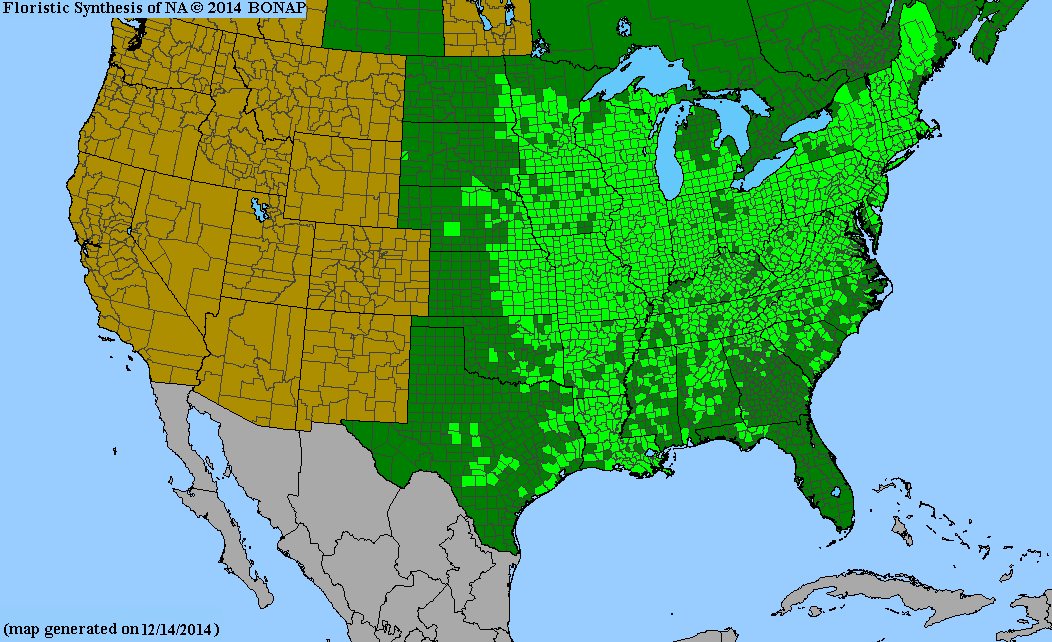
- Native Range: Ranges across most of eastern and central North America, from southern Canada south to Florida and Texas.
- Hydrology: Dry-Mesic
- Drought Tolerance: Moderate
- Salinity Tolerance: Low
- Flood Tolerance: Low - A woodland species adapted to consistently moist but well-drained soils; not tolerant of standing water.
- Shade Tolerance: Tolerant
- Root Depth: Shallow (Under 12 in.)
- Growth Habit: Clumping/Mounding - spreads by rhizome over time
- USDA Hardiness Zones: 3-8
- Deer Resistance: Yes (Rarely Damaged) - see flags on sourcing
- Pollinator Value: Supports bees - "particularly great for native bees"
Share