Amelanchier laevis (Allegheny Serviceberry)
Amelanchier laevis (Allegheny Serviceberry)
Wholesale to the Trade - Please log into your business account.
Wholesale to the Trade - Please log into your business account.
Couldn't load pickup availability
More information on the 2027 crop to come
A refined, hairless-leaved alternative to shadbush for understory and woodland-edge specification work, Allegheny serviceberry brings the same four-season wildlife value in a more upright, tree-like form better suited to specimen and screen plantings.
Species Overview
Amelanchier laevis, commonly called Allegheny serviceberry, is a small, deciduous, usually multi-trunked understory tree or tall shrub native to thickets, open woods, sheltered slopes, and wood margins in eastern North America, where it typically grows 15 to 25 feet tall. It features showy, slightly fragrant, white flowers in drooping clusters that appear in early spring before the leaves. Flowers give way to small, round, edible berries that ripen to dark purplish-black in June. Finely-toothed, obovate leaves emerge with a bronzish-purple tinge in spring, mature to lustrous dark green in summer, and turn red-orange in fall.
Application
- Woodland understory and edge restoration
- Specimen or small-group tree plantings for four-season interest
- Screen or informal hedge plantings in shrub form
- Wildlife and bird-garden plantings - fruit is heavily used by songbirds
Growing Conditions / Specification Data
- Light: Full Sun to Full Shade - tolerates dappled shade to full shade
- Soil/Moisture Tolerance: Prefers moist, well-drained soils; tolerates alkaline and clay soils
- Drought Tolerance: Low - sensitive to drought; avoid dry, droughty sites
- Flood Tolerance: Moderate - Tolerates periodic soil saturation but not prolonged standing water.
- Mature Height: 15-25 ft.
- Fall Color: Yellow, Orange, Red
- Bloom Color / Period: White; April
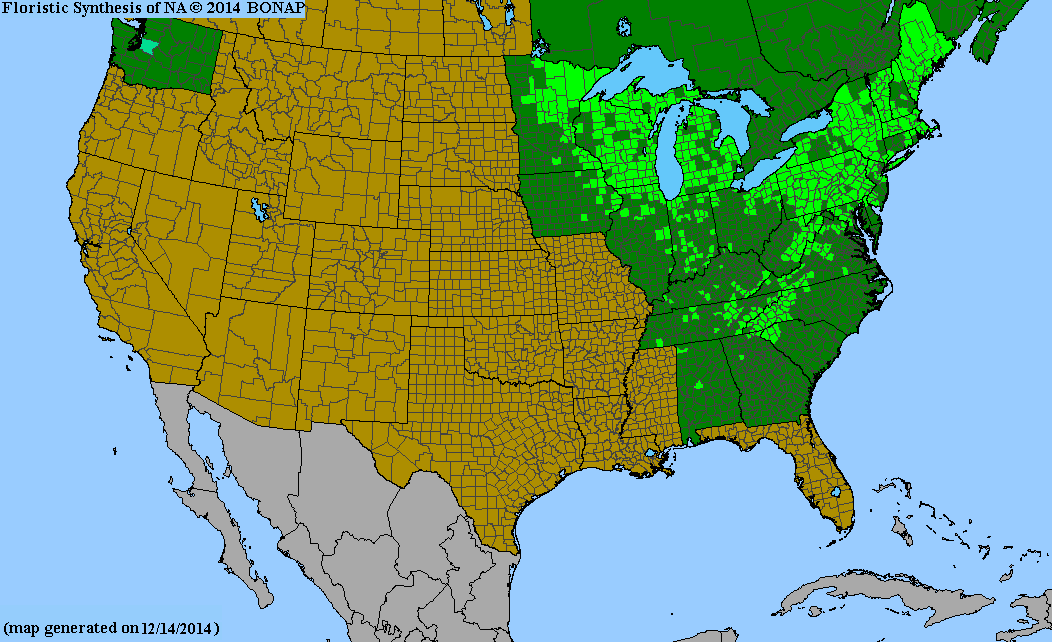
- Native Range: Newfoundland west to Ontario, Minnesota, and Iowa, south to Georgia and Alabama
- Hydrology: Mesic-Moist
- Growth Rate: Moderate
- Wetland Indicator Status: NI (No Indicator) - see flags
- Root Depth: Deep (24-36 in.) (30 in.)
- Shade Tolerance: Intolerant
- Salinity Tolerance: Low
- Growth Habit: Upright, Multi-stemmed
- USDA Hardiness Zones: 4-8
- Deer Resistance: Some - see flags
- Pollinator Value: Larval host, supports bees, supports birds
- Juglone Tolerance: Tolerant (genus-level inference, not independently species-confirmed)
Share