A slow-growing but exceptionally tough evergreen groundcover, bearberry is confirmed highly drought tolerant and shade tolerant despite thriving in dry, upland sites - with documented larval host value for hummingbird-visited, butterfly-supporting pollinator habitat in the driest, sandiest restoration settings.
Species Overview
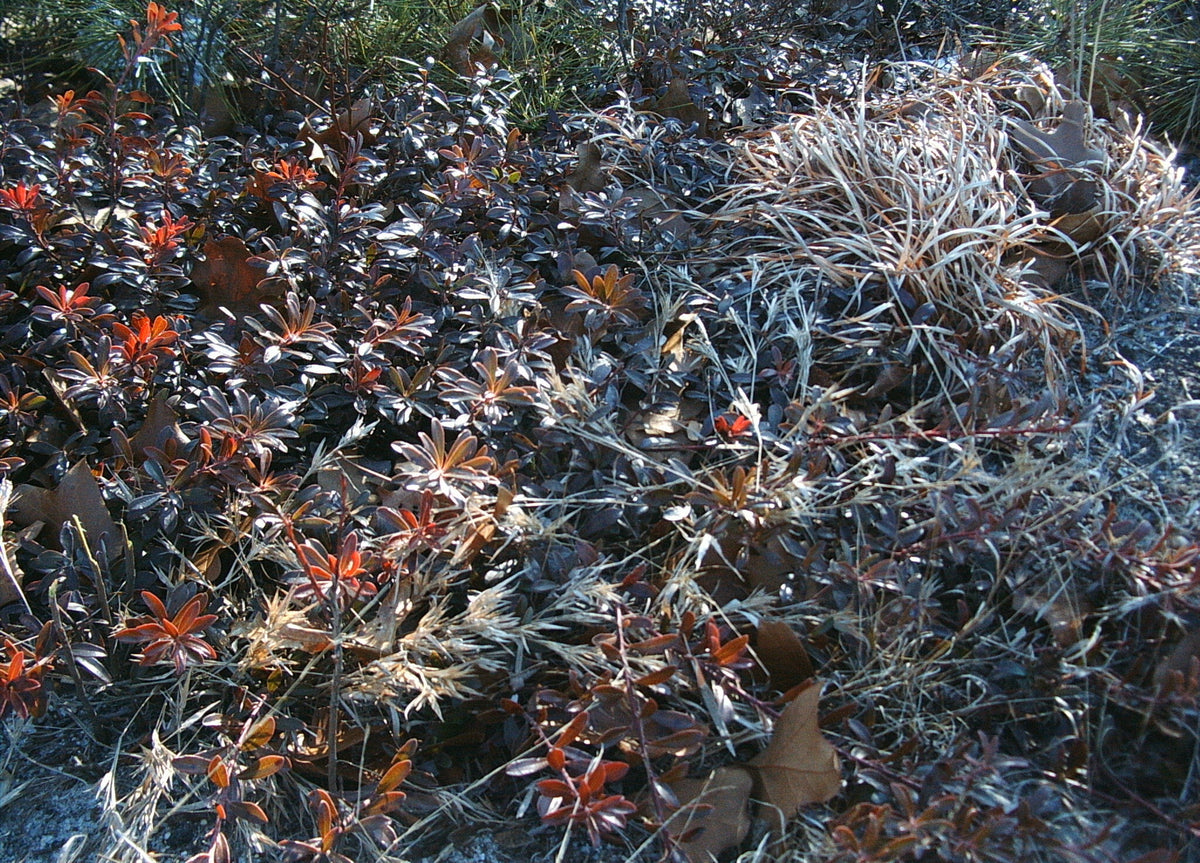
Arctostaphylos uva-ursi, or bearberry, is a slow-growing, creeping evergreen shrub with a circumpolar distribution, forming trailing mats 6 inches to 1 foot tall. Small, leathery, glossy leaves turn red/bronze in winter, with white-to-pink, bell-shaped flowers in mid-spring giving way to bright red berries.
Application
Sandy dune and rocky upland groundcover
Larval host and pollinator habitat - supports bees, butterflies, and hummingbirds
Erosion control on dry banks and rock walls
Upland (UPL) restoration where few other groundcovers persist
Growing Conditions / Specification Data
Light: Full Sun to Full Shade
Soil/Moisture Tolerance: Dry, well-drained soils
Growth Rate: Slow
Drought Tolerance: High
Flood Tolerance: Low - A dry, sandy or rocky soil specialist adapted to upland (UPL) sites; not tolerant of standing water.
Difficult to transplant and slow to establish in its first year - site permanently and be patient; once established, spreads readily by rooting stolons. Berries provide excellent emergency winter food for birds and mammals.