Baccharis halimifolia (Groundseltree)
Baccharis halimifolia (Groundseltree)
Wholesale to the Trade - Please log into your business account.
Wholesale to the Trade - Please log into your business account.
Couldn't load pickup availability
More information on the 2027 crop to come
More information on the 2027 crop to come
More information on the 2027 crop to come
More information on the 2027 crop to come
One of the very few native eastern shrubs genuinely suited to direct ocean-adjacent planting, groundsel tree combines strong salt and coastal-exposure tolerance with a late-season bloom that provides pollinator forage when few other woody plants are still flowering.
Species Overview
Baccharis halmifolia, commonly known as groundsel tree or saltbush, is a deciduous shrub or small tree native to the southeastern United States. It typically grows between 10 to 15 feet in height, although it can occasionally reach up to 25 feet. The plant is distinguished by its lance-shaped, dark green leaves that are often serrated along the edges. In late summer to fall, it produces small, fluffy, white to cream-colored flowers arranged in dense clusters, which are particularly attractive to pollinators.
Application
- Coastal and salt-spray-exposed plantings - one of the few native shrubs suited to direct oceanfront sites
- Salt marsh edge and dune-adjacent restoration
- Late-season pollinator habitat plantings
- Soil stabilization on exposed, sandy, or disturbed coastal sites
- Wildlife habitat - dense branching provides nesting cover for birds
Growing Conditions / Specification Data
- Light: Full Sun
- Soil/Moisture Tolerance: Highly adaptable, including high-salinity soils; suitable for coastal and wetland environments
- Growth Rate: Rapid
- Plant Type: Shrub
- Mature Height: 8-15 ft. (occasionally to 25 ft.)
- Fall Color: Insignificant/None
- Bloom Color / Period: White, Cream; September-November
- Wetland Indicator Status: FACW (Facultative Wetland) - Atlantic and Gulf Coastal Plain region
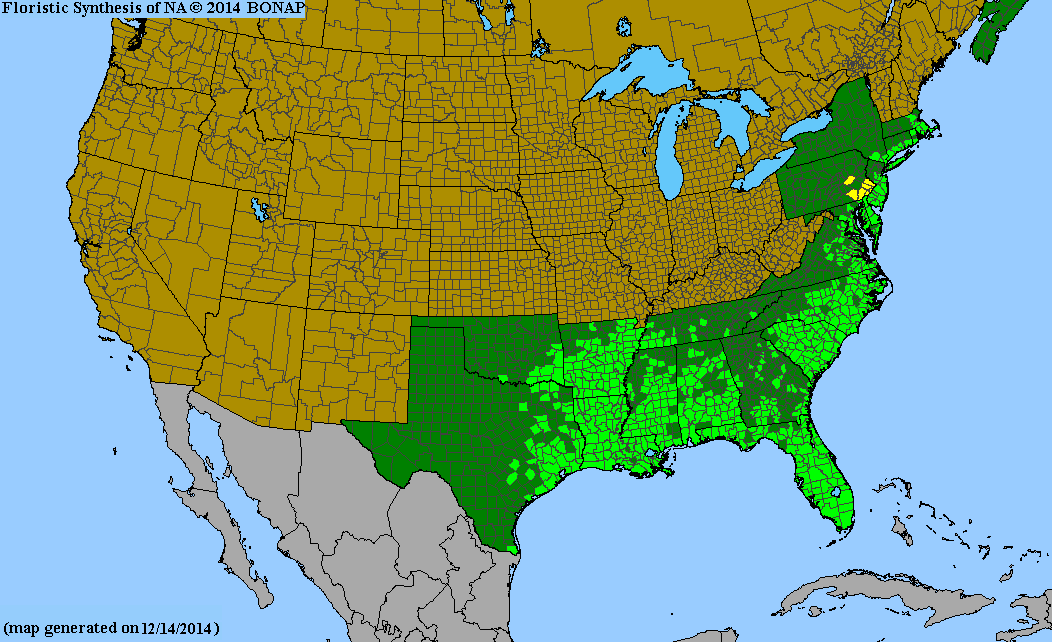
- Native Range: Nova Scotia south to Florida, west to Texas and Oklahoma
- Hydrology: Moist-Wet
- Drought Tolerance: High
- Root Depth: Moderate (12-24 in.) (20 in.)
- USDA Hardiness Zones: 5-9
- Deer Resistance: Yes (Rarely Damaged)
- Shade Tolerance: Intermediate
- Salinity Tolerance: Moderate
- Flood Tolerance: Moderate - Found at the upland edge of salt marshes and other periodically wet sites; tolerates occasional inundation but is not a true wetland obligate.
- Growth Habit: Multi-stemmed/Thicket-forming
- Pollinator Value: Supports bees, supports butterflies
Share