Callicarpa americana (American Beautyberry)
Callicarpa americana (American Beautyberry)
Wholesale to the Trade - Please log into your business account.
Wholesale to the Trade - Please log into your business account.
Couldn't load pickup availability
More information on the 2027 crop to come
More information on the 2027 crop to come
One of the most visually dramatic native shrubs available, American beautyberry's dense rings of magenta-purple fall fruit provide both a striking ornamental display and a genuine winter food source for birds - a strong specification choice for wildlife-focused shrub borders and understory plantings.
Species Overview
American Beautyberry is a deciduous shrub with beautiful, arching branches and stunning fruit. Light lavender to pink blooms bloom from June to August, followed by spectacular, bright purple, berry-like fruits that ring the stem. The fruits, which last into early winter, provide food for a variety of birds. American Beautyberry is an excellent shrub to put under trees, massed in the back of a shrub border or in a forest garden.
Application
- Understory and woodland-edge plantings, including under trees
- Shrub border massing, particularly at the back of mixed plantings
- Wildlife habitat plantings - fruit is an important winter food source for birds
- Pollinator garden plantings
Growing Conditions / Specification Data
- Light: Full Sun to Part Shade
- Soil/Moisture Tolerance: Adaptable to many soil types provided drainage is good; moist lowlands to average garden conditions
- Growth Rate: Fast
- Plant Type: Shrub
- Mature Height: 4-8 ft.
- Fall Color: Yellow
- Bloom Color / Period: Pink, Purple; June-August
- Wetland Indicator Status: FACU (Facultative Upland) - Atlantic and Gulf Coastal Plain region
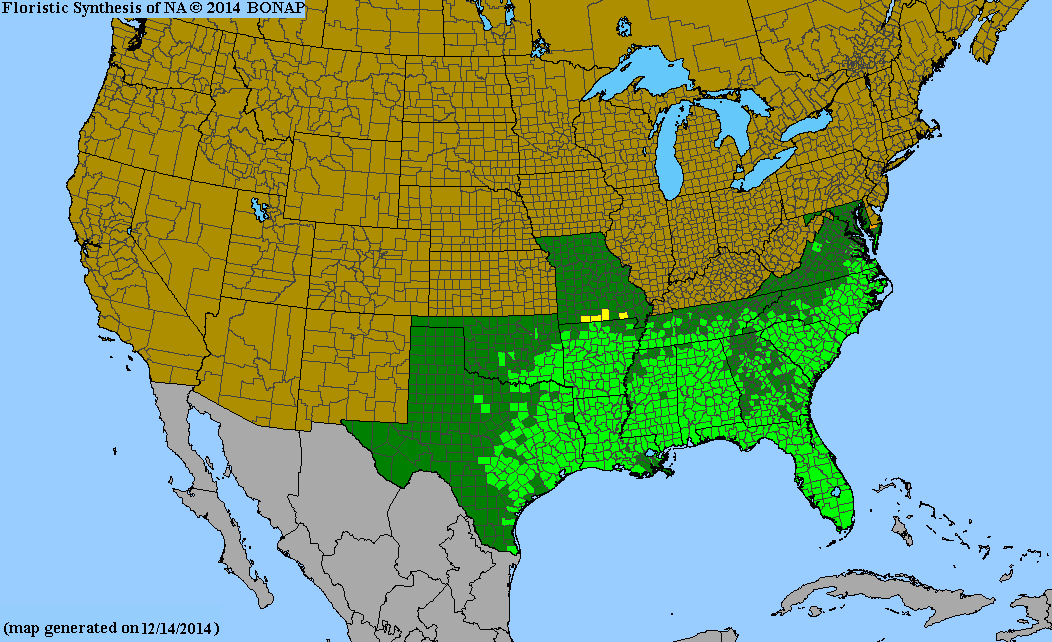
- Native Range: Central and southeastern United States, Bermuda, and Cuba
- Hydrology: Dry-Mesic
- Root Depth: Moderate (12-24 in.)
- Salinity Tolerance: Low
- Drought Tolerance: Moderate
- Deer Resistance: No (Frequently Damaged)
- Flood Tolerance: Moderate - A moist-woodland shrub tolerant of occasional wet soil, though not a true wetland obligate.
- Shade Tolerance: Intermediate - intolerant of deep shade
- Growth Habit: Vase-shaped - open, arching branches
- USDA Hardiness Zones: 6-9
- Pollinator Value: Supports bees, supports birds
Share