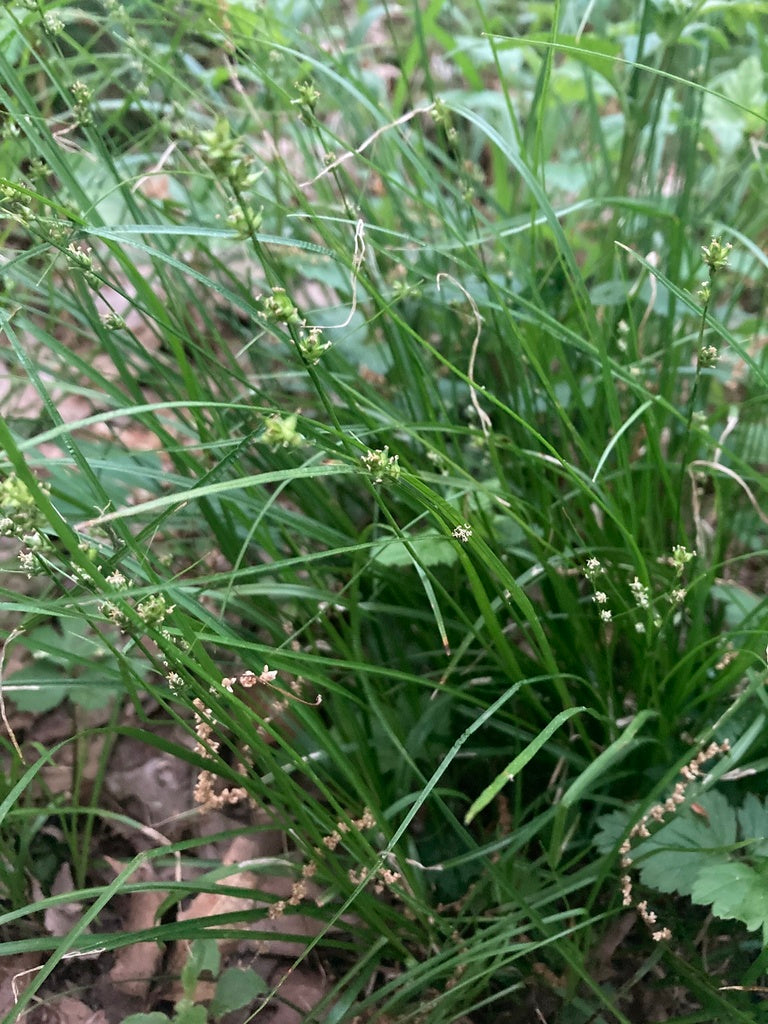
Carex rosea (Rosy Sedge)
Carex rosea (Rosy Sedge)
Wholesale to the Trade - Please log into your business account.
Wholesale to the Trade - Please log into your business account.
Couldn't load pickup availability
A fine-textured, well-behaved woodland sedge, curly-styled wood sedge is a reliable groundcover for shaded restoration sites where an elegant, low-profile fill species is needed between larger woodland perennials.
Species Overview
Carex rosea, commonly known as rosy sedge or curly wood sedge, is a perennial sedge native to the woodlands and shaded areas of eastern North America. It typically forms dense clumps of slender, arching stems, with narrow, grass-like, bright green, finely textured leaves. In late spring to early summer, it produces small, inconspicuous flower spikes, each surrounded by distinctive, pale green to reddish-brown bracts that give the sedge its common name.
Application
- Woodland groundcover and shade garden plantings
- Naturalized understory plantings between larger woodland perennials
- Ecological restoration in shaded, moist-to-average forest sites
Growing Conditions / Specification Data
- Light: Part Shade to Full Shade
- Soil/Moisture Tolerance: Moist, well-drained soils rich in organic matter
- Plant Type: Graminoid
- Mature Height: 1-2 ft. (existing records show 20-40 cm / 8-16 in.; see flags)
- Fall Color: Insignificant/None
- Bloom Color / Period: Green, Brown; May-July
- Wetland Indicator Status: FACU (Facultative Upland) - Atlantic and Gulf Coastal Plain region
- Native Range: Eastern North America
- Hydrology: Dry-Mesic
- Root Depth: Shallow (Under 12 in.)
- Salinity Tolerance: None
- Growth Rate: Moderate
- Drought Tolerance: Moderate
- Deer Resistance: Yes (Rarely Damaged)
- Flood Tolerance: Low - A mesic woodland sedge; not tolerant of standing water.
- Shade Tolerance: Tolerant
- Growth Habit: Clumping/Mounding
- USDA Hardiness Zones: 3-8
- Pollinator Value: None significant - wind-pollinated
Share