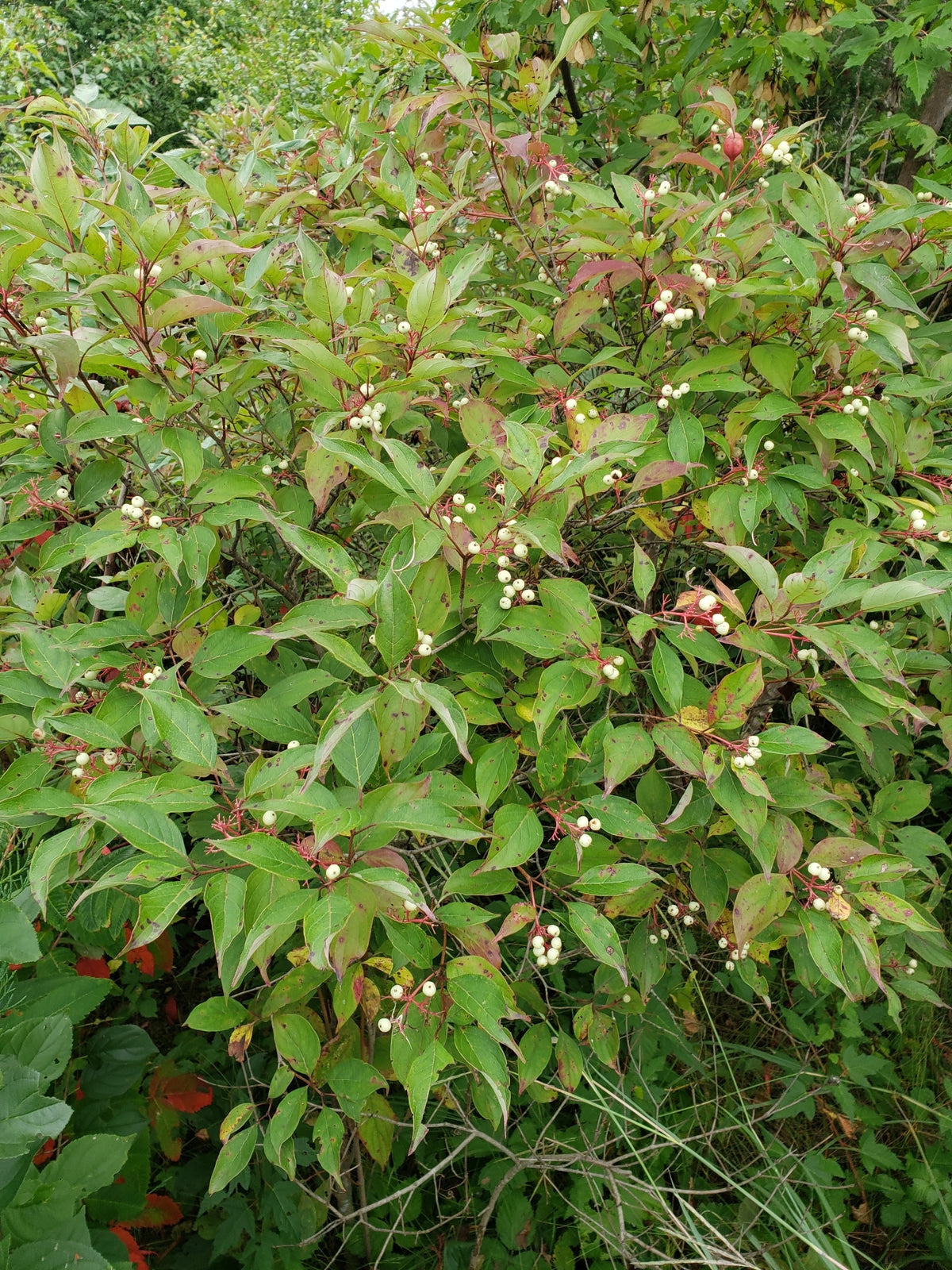
Cornus racemosa (Gray Dogwood)
Cornus racemosa (Gray Dogwood)
Wholesale to the Trade - Please log into your business account.
Wholesale to the Trade - Please log into your business account.
Couldn't load pickup availability
More information on the 2027 crop to come
More information on the 2027 crop to come
More information on the 2027 crop to come
A tough, adaptable thicket-forming dogwood, gray dogwood combines genuine larval host value for the Spring Azure butterfly with striking red fruit stalks that persist through winter long after birds have stripped the white berries - a reliable choice across a wide range of soil conditions.
Species Overview
Cornus racemosa, known as gray dogwood, is a deciduous shrub native to the eastern and central United States. It grows 10 to 15 feet tall and forms dense thickets through suckering. In late spring, it produces clusters of small white flowers, followed by white berries on bright red stems in late summer, which are highly attractive to birds. Gray dogwood thrives in a variety of soils, from dry uplands to wetlands.
Application
- Naturalized borders, screening, and thicket plantings
- Erosion control near ponds, streams, and embankments
- Rain garden and pollinator garden plantings
- Larval host habitat for the Spring Azure butterfly and several moth species
- Wildlife habitat - nesting sites for birds and small mammals
Growing Conditions / Specification Data
- Light: Full Sun to Part Shade
- Soil/Moisture Tolerance: Wide variety of soil types; prefers moist soil but withstands dry, wet, and poor soils
- Plant Type: Shrub
- Mature Height: 8-15 ft.
- Fall Color: Red, Purple
- Bloom Color / Period: White, Green; May-July
- Wetland Indicator Status: FAC (Facultative) - Atlantic and Gulf Coastal Plain region
- Native Range: Southeastern Canada and the eastern United States, from Maine to Georgia, west to North Dakota and Texas
- Hydrology: Mesic-Moist
- Root Depth: Moderate (12-24 in.)
- Salinity Tolerance: Low
- Growth Rate: Rapid
- Drought Tolerance: Moderate
- Deer Resistance: Some
- Flood Tolerance: Moderate - A moist-soil shrub with some wetland-margin association; tolerates periodically wet soil.
- Shade Tolerance: Intermediate
- Growth Habit: Multi-stemmed/Thicket-forming - colonizes via suckers
- USDA Hardiness Zones: 4-8
- Pollinator Value: Larval host, supports butterflies, supports moths
Planting Guidance
- Colonizes via suckering if not maintained - remove suckers to prevent spread, or allow to naturalize as a thicket where appropriate.
Share