Corylus americana (American Hazlenut)
Corylus americana (American Hazlenut)
Wholesale to the Trade - Please log into your business account.
Wholesale to the Trade - Please log into your business account.
Couldn't load pickup availability
More information on the 2027 crop to come
One of the few native shrubs that combines genuine wildlife and edible-nut value with real shade tolerance, American hazelnut hosts the striking Luna Moth as a larval species while also feeding squirrels, deer, foxes, and a range of game birds - all from a plant naturally resistant to the blight that devastates commercial hazelnut varieties.
Species Overview
Corylus americana, the American hazelnut, is a suckering, native deciduous shrub in the Betulaceae family, valuable for its ornamental qualities and its production of edible nuts. It is multi-stemmed, dense, and usually reaches a mature height of 8 to 12 feet. Each plant bears both female flowers and male catkins in very early spring, before the leaves emerge, and produces edible nuts that mature between July and October.
Application
- Hedgerow, windbreak, and wildlife border plantings
- Woodland edge and understory restoration - tolerates dense shade
- Edible-landscape and food-forest plantings
- Larval host habitat for the Luna Moth
- Wildlife habitat - nuts are a higher-nutrition food source than acorns for many species
Growing Conditions / Specification Data
- Light: Full Sun to Full Shade
- Soil/Moisture Tolerance: Rich, moist, well-drained soils preferred; tolerates drier conditions in more shade and wetter conditions along stream banks
- Growth Rate: Rapid
- Plant Type: Shrub
- Mature Height: 8-12 ft.
- Fall Color: Yellow, Orange, Red (occasionally purple)
- Bloom Color / Period: Yellow, Red; March
- Wetland Indicator Status: FACU (Facultative Upland)
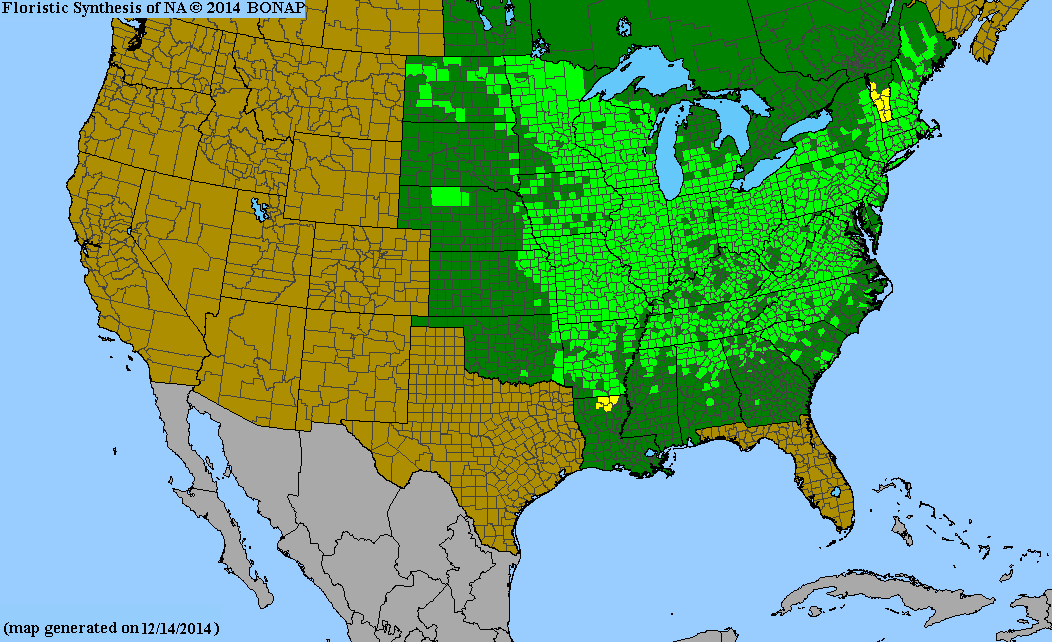
- Native Range: Eastern and central United States and extreme southern Canada
- Hydrology: Dry-Mesic
- Root Depth: Moderate (12-24 in.)
- Salinity Tolerance: Low
- Drought Tolerance: Moderate
- Flood Tolerance: Low - An upland and moist-woodland-edge shrub, not a wetland species; not documented as flood tolerant.
- Shade Tolerance: Intermediate
- Growth Habit: Multi-stemmed/Thicket-forming - suckering shrub
- USDA Hardiness Zones: 4-9
- Deer Resistance: Some - see flags
- Pollinator Value: Larval host, supports moths
Planting Guidance
- Wind-pollinated - a small colony of plants is recommended for reliable, high nut yields, though a single plant can produce some nuts.
Share