Dicentra eximia (Wild Bleeding Heart)
Dicentra eximia (Wild Bleeding Heart)
Wholesale to the Trade - Please log into your business account.
Wholesale to the Trade - Please log into your business account.
Couldn't load pickup availability
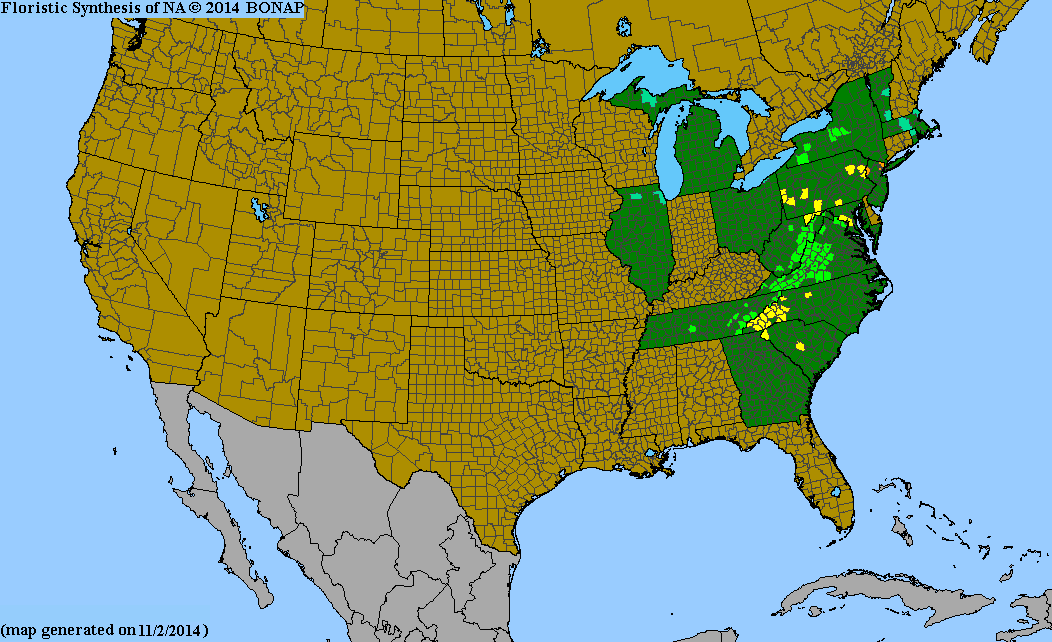
A genuinely long-blooming woodland perennial, wild bleeding heart flowers sporadically from spring all the way through fall in favorable sites - but with the important caveat that it's officially endangered in both New Jersey and Pennsylvania, so any restoration use warrants a deliberate sourcing conversation.
Species Overview
Dicentra eximia, or Fringed Bleeding Heart, is a native perennial wildflower found in shaded woodlands and rocky slopes. It features finely divided, fern-like foliage and heart-shaped pink to rose flowers that bloom from spring to fall. This species thrives in partial to full shade and moist, well-drained soils, and is one of only three bleeding heart species native to the eastern United States.
Application
- Shaded woodland garden plantings, prioritizing an extended bloom window
- Rocky slope and ledge restoration in filtered shade
- Companion planting with other woodland natives (wild ginger, foamflower, Christmas fern)
- Conservation-focused plantings given its at-risk status in the region
Growing Conditions / Specification Data
- Light: Part Shade to Full Shade - tolerates brief direct sun
- Soil/Moisture Tolerance: Rich, moist, well-drained soil; does not tolerate dry soil or wet winter soil
- Plant Type: Forb
- Mature Height: 1-2 ft.
- Fall Color: Insignificant/None
- Bloom Color / Period: Pink; May-September
- Native Range: Appalachian Mountains, extending into southern New England
- Pollinator Value: Supports bees - tubular pink flowers are visited by long-tongued bees, particularly bumblebees, for nectar.
- Hydrology: Dry-Mesic
- Root Depth: Shallow (Under 12 in.)
- Salinity Tolerance: Low
- Growth Rate: Moderate
- Drought Tolerance: Moderate
- Deer Resistance: Yes (Rarely Damaged)
- Flood Tolerance: Low - A rocky woodland species adapted to well-drained soil; not tolerant of standing water.
- Growth Habit: Clumping/Mounding - fern-like foliage clump
- USDA Hardiness Zones: 3-9
Planting Guidance
- Self-sows readily in favorable locations - site where light reaches the ground through winter but is filtered once the tree canopy leafs out.
Share