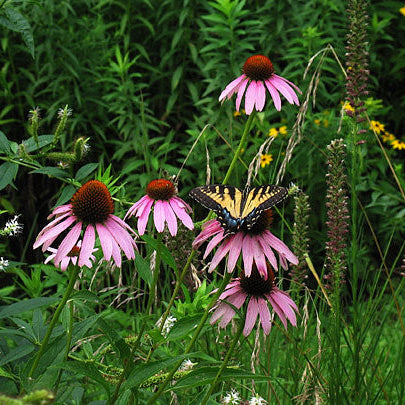
Echinacea purpurea (Purple Coneflower)
Echinacea purpurea (Purple Coneflower)
Wholesale to the Trade - Please log into your business account.
Wholesale to the Trade - Please log into your business account.
Couldn't load pickup availability
More information on the 2027 crop to come
One of the most reliably deer-resistant native perennials available, purple coneflower combines a long midsummer-to-fall bloom window with a deep taproot that provides genuine drought resilience - a low-risk, high-value staple for pollinator plantings of any scale.
Species Overview
Echinacea purpurea is a beloved native wildflower prized for its showy, daisy-like flowers with purple petals and prominent orange cones. Blooming from midsummer to early fall, this perennial reaches 2 to 4 feet in height and thrives in full sun and well-drained soils. Its blooms attract pollinators such as bees, butterflies, and hummingbirds, while its seeds are a valuable food source for birds in winter.
Application
- Prairie and meadow restoration - a foundational pollinator species
- Pollinator gardens and mixed perennial borders
- Deer-pressured sites
- Larval host habitat for the Wavy-Lined Emerald moth
- Winter interest plantings - seed heads persist and feed goldfinches through fall and winter
Growing Conditions / Specification Data
- Light: Full Sun to Part Shade
- Soil/Moisture Tolerance: Prefers well-drained, moist loam but adaptable to various soil types, including clay and poor soils
- Drought Tolerance: High
- Flood Tolerance: Low - Adapted to dry to medium, well-drained soil; not tolerant of standing water.
- Plant Type: Forb
- Mature Height: 2-4 ft.
- Fall Color: Insignificant/None
- Bloom Color / Period: Purple; June-September
- Native Range: Central and eastern United States (Ohio to Michigan to Iowa, south to Louisiana and Georgia)
- Hydrology: Dry-Mesic
- Growth Rate: Moderate
- Shade Tolerance: Intermediate
- Salinity Tolerance: Moderate
- Root Depth: Deep (24-36 in.) - deep taproot
- Growth Habit: Clumping/Mounding
- USDA Hardiness Zones: 3-9
- Deer Resistance: Yes (Rarely Damaged)
- Pollinator Value: Larval host, supports bees, supports butterflies, supports hummingbirds, nectar source
Planting Guidance
- A naturally leggy plant, especially in clay soils - cutting back hard in fall (rather than early-season pruning) encourages a bushier, multi-stem habit the following year.
Share