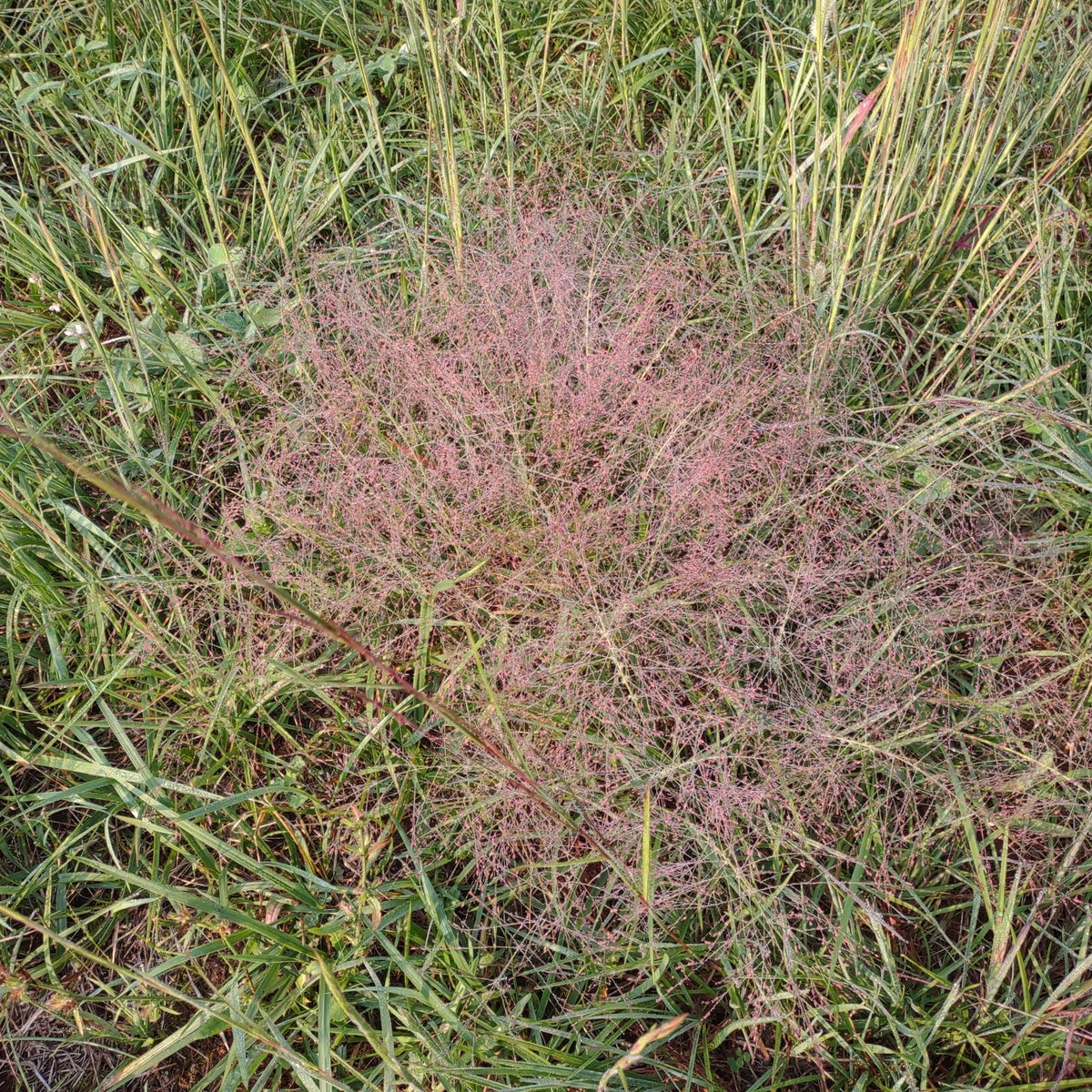
Eragrostis spectabilis (Purple Lovegrass)
Eragrostis spectabilis (Purple Lovegrass)
Wholesale to the Trade - Please log into your business account.
Wholesale to the Trade - Please log into your business account.
Couldn't load pickup availability
One of the most visually striking native grasses for the poorest, sandiest sites, purple lovegrass turns a genuinely spectacular purplish-pink haze in late summer - exactly where few other plants can establish at all.
Species Overview
Eragrostis spectabilis, commonly known as purple lovegrass, is a warm-season perennial grass native to North America. It thrives in sandy soils, open fields, roadsides, and disturbed areas, often flourishing in full sun and well-drained conditions. This grass forms dense clumps and its slender leaves turn a striking reddish-purple color in late summer to early fall, when airy panicles of tiny purplish flowers create a hazy, colorful display.
Application
- Restoration on dry, sandy, or gravelly soils where few other plants survive
- Late-season ornamental accent plantings, particularly in masses
- Erosion control on poor, disturbed, or roadside soils
- Wildlife habitat - seeds are a food source for birds
Growing Conditions / Specification Data
- Light: Full Sun
- Soil/Moisture Tolerance: Dry, sandy, or gravelly, infertile soils
- Drought Tolerance: High
- Flood Tolerance: Low - A dry, sandy-soil specialist; not tolerant of standing water.
- Growth Rate: Slow - spreads slowly by seed and rhizome
- Plant Type: Graminoid
- Mature Height: 1-2 ft.
- Fall Color: Insignificant/None
- Bloom Color / Period: Purple; August-October
- Wetland Indicator Status: UPL (Obligate Upland, regional source) - see flags
- Native Range: Maine to South Dakota, south to Florida, Texas, and Arizona
- Hydrology: Dry
- Root Depth: Shallow (Under 12 in.)
- Salinity Tolerance: Low
- Deer Resistance: Yes (Rarely Damaged)
- Shade Tolerance: Intolerant
- Growth Habit: Clumping/Mounding
- USDA Hardiness Zones: 5-9
- Pollinator Value: None significant - wind-pollinated
Share