Eurybia spectabilis (Showy Aster)
Eurybia spectabilis (Showy Aster)
Wholesale to the Trade - Please log into your business account.
Wholesale to the Trade - Please log into your business account.
Couldn't load pickup availability
More information on the 2027 crop to come
A coastal-plain and Pine Barrens specialist, showy aster delivers an unusually large, vivid violet-blue bloom (up to 2 in. across) for a low-growing aster, thriving in exactly the sandy, dry conditions characteristic of the Atlantic coastal plain and Pine Barrens.
Species Overview
Eurybia spectabilis, commonly known as the Eastern Showy Aster or Purple Wood Aster, is a herbaceous perennial native to a variety of habitats including open woodlands, forest edges, and meadows, with a distribution concentrated on the coastal plain, especially in pine barrens. From late summer to fall, it produces clusters of showy flowers with violet-purple ray florets surrounding yellow disc florets.
Application
- Pine Barrens and coastal-plain restoration - a regional specialty species
- Dry, sandy-soil restoration and open-woodland plantings
- Late-season pollinator habitat for bees and butterflies
- Naturalized plantings on dry road banks and open clearings
Growing Conditions / Specification Data
- Light: Full Sun to Part Shade
- Soil/Moisture Tolerance: Dry, sandy, well-drained soils; a pine barrens specialist
- Drought Tolerance: High
- Flood Tolerance: Low - A dry, sandy-habitat aster; not tolerant of standing water.
- Plant Type: Forb
- Mature Height: 1-2 ft.
- Fall Color: Red-Purple - foliage often turns burgundy in fall and winter
- Bloom Color / Period: Purple, Yellow; August-October
- Wetland Indicator Status: NI (No Indicator) - see flags
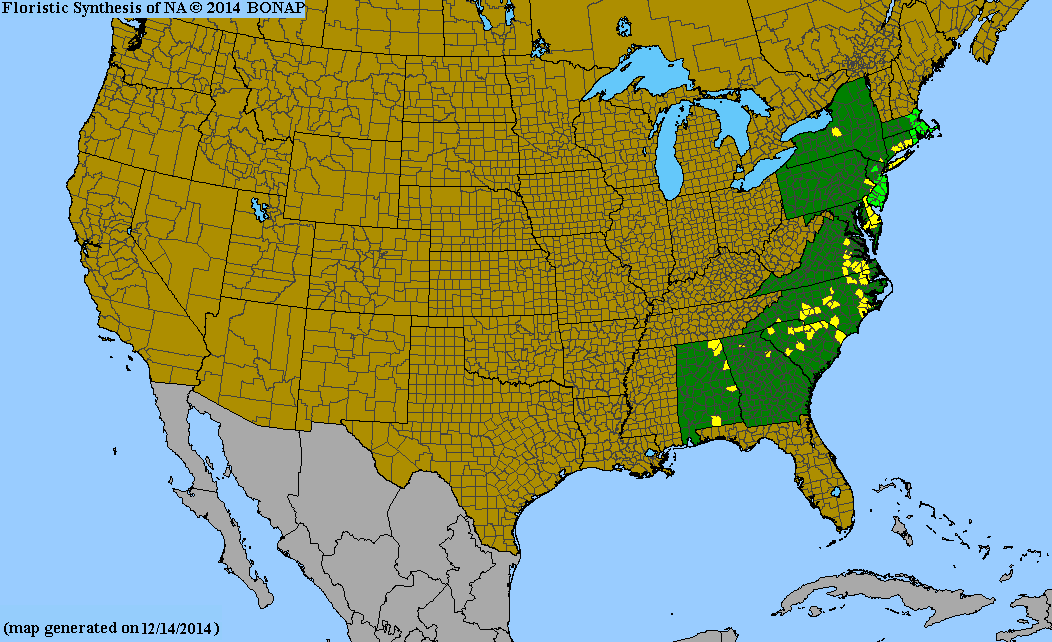
- Native Range: New York and Massachusetts south to Georgia and Alabama, concentrated on the Atlantic coastal plain
- Hydrology: Dry-Mesic
- Root Depth: Shallow (Under 12 in.)
- Salinity Tolerance: Low
- Growth Rate: Moderate
- Deer Resistance: Yes (Rarely Damaged)
- Shade Tolerance: Intermediate
- Growth Habit: Spreading - rhizomatous
- USDA Hardiness Zones: 5-9
- Pollinator Value: Supports bees, supports butterflies
Planting Guidance
- Spreads from seed and forms rhizomatous colonies - individual clumps can be lifted and divided once they reach sufficient size.
Share