Helianthus giganteus (Giant Sunflower)
Helianthus giganteus (Giant Sunflower)
Wholesale to the Trade - Please log into your business account.
Wholesale to the Trade - Please log into your business account.
Couldn't load pickup availability
One of the tallest native perennials available, giant sunflower delivers exceptional wildlife value for its size - confirmed larval host for the Silvery Checkerspot and Gorgone Checkerspot butterflies, with a rich and specific list of visiting native bee genera.
Species Overview
Helianthus giganteus, or giant sunflower, is a tall, rough-stemmed perennial reaching 3 to 12 feet, with a reddish-purple, hairy central stem that branches only in its upper third. Despite the name, its flower heads are comparatively small relative to the plant's impressive overall height. It's found in moist places, marshes, and wet meadows, and can even be used by beavers in dam construction.
Application
- Wetland and marsh restoration - thrives in moist to wet soils
- Back-of-border and privacy screening in large native plantings
- Larval host habitat for Silvery Checkerspot and Gorgone Checkerspot butterflies
- Wildlife habitat - seed heads feed birds through fall and winter
Growing Conditions / Specification Data
- Light: Full Sun
- Soil/Moisture Tolerance: Moist to wet soils; marshes and wet meadows
- Plant Type: Forb
- Mature Height: 4-8 ft. (occasionally to 12 ft.)
- Fall Color: Insignificant/None
- Bloom Color / Period: Yellow; July-September
- Wetland Indicator Status: FACW (Facultative Wetland)
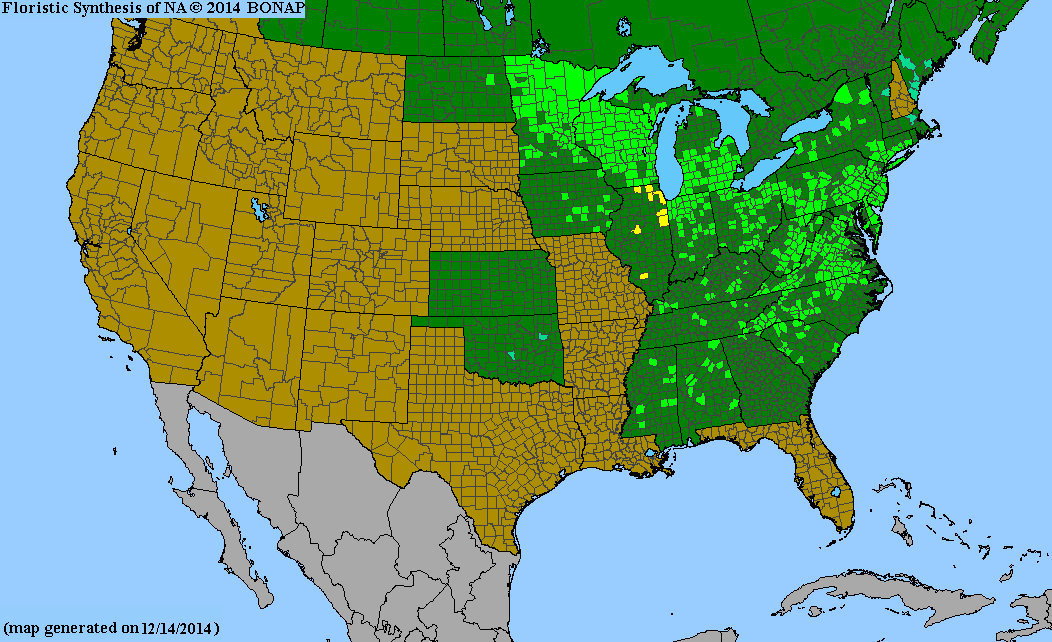
- Native Range: New York and Ontario to Minnesota, south to Georgia and Kentucky; naturalized northeastward
- Hydrology: Moist-Wet
- Root Depth: Moderate (12-24 in.)
- Salinity Tolerance: Low
- Growth Rate: Rapid
- Drought Tolerance: Low
- Deer Resistance: Some
- Flood Tolerance: Moderate - A tall, wetland-adjacent sunflower tolerant of periodically wet soil, though less strictly wetland-associated than its relative swamp sunflower.
- Shade Tolerance: Intermediate
- Growth Habit: Upright
- USDA Hardiness Zones: 4-8
- Pollinator Value: Larval host, supports bees, supports specialist/oligolectic bees, supports butterflies
Planting Guidance
- Spreads by rhizome and can be aggressive - site with room to naturalize, or divide clumps periodically to control spread.
Share