One of the tallest broadleaf trees in eastern forests - the largest specimens exceed 150 feet - tulip poplar's tulip-shaped spring blooms provide genuine nectar value for bees, even though the flowers themselves often go unnoticed high in the canopy of a mature tree.
Species Overview
Liriodendron tulipifera, commonly called the tulip tree or yellow poplar, is one of the tallest native hardwoods in North America, often reaching 100 to 150 feet in height despite belonging to the magnolia family rather than the true poplars. It features distinctive four-lobed leaves and large, cup-shaped, greenish-yellow flowers with orange bases in late spring.
Application
Large-property shade tree and specimen plantings - among the tallest native hardwoods
Wetland Indicator Status: NI (No Indicator) - see flags
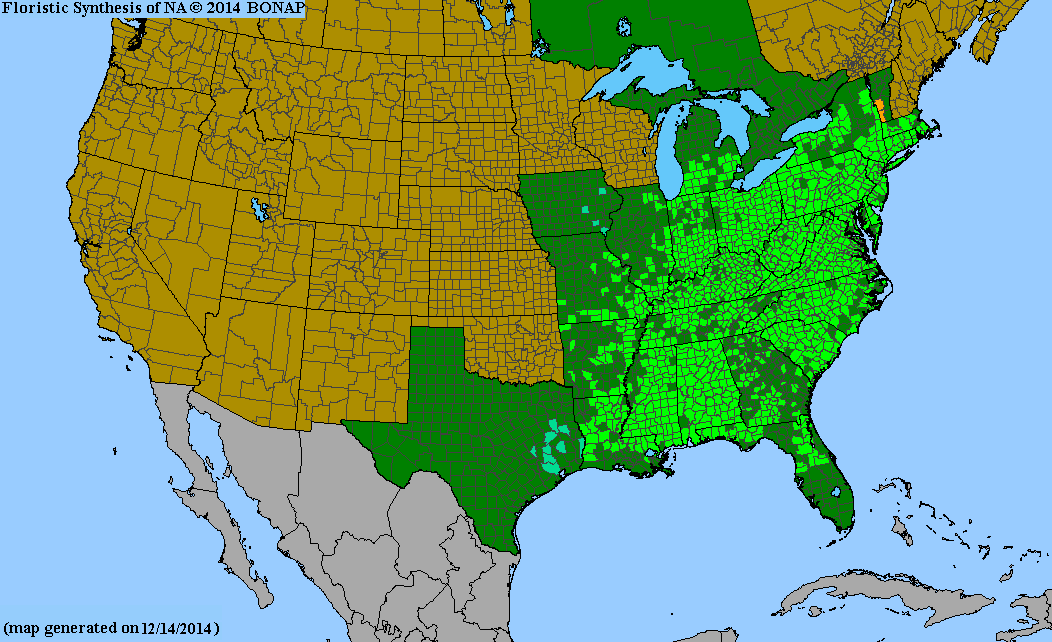
Native Range: Eastern North America
Hydrology: Dry-Mesic
Root Depth: Deep (24-36 in.)
Drought Tolerance: Moderate
Deer Resistance: Yes (Rarely Damaged)
Shade Tolerance: Intolerant
Salinity Tolerance: Moderate
Flood Tolerance: Low - An upland to mesic forest tree; not documented as flood tolerant.
Growth Habit: Upright
USDA Hardiness Zones: 4-9
Pollinator Value: Supports bees
Planting Guidance
Fast-growing but somewhat weak-wooded - susceptible to limb breakage in high winds or heavy ice/snow. Reserve for large sites with room for eventual scale.