Morella pensylvanica (Northern Bayberry)
Morella pensylvanica (Northern Bayberry)
Wholesale to the Trade - Please log into your business account.
Wholesale to the Trade - Please log into your business account.
Couldn't load pickup availability
More information on the 2027 crop to come
More information on the 2027 crop to come
More information on the 2027 crop to come
A genuine coastal workhorse, northern bayberry fixes its own nitrogen via root-associated bacteria - enriching poor, sandy dune soils for the species that follow it - while serving as the confirmed larval host for the striking Columbia Silkmoth.
Species Overview
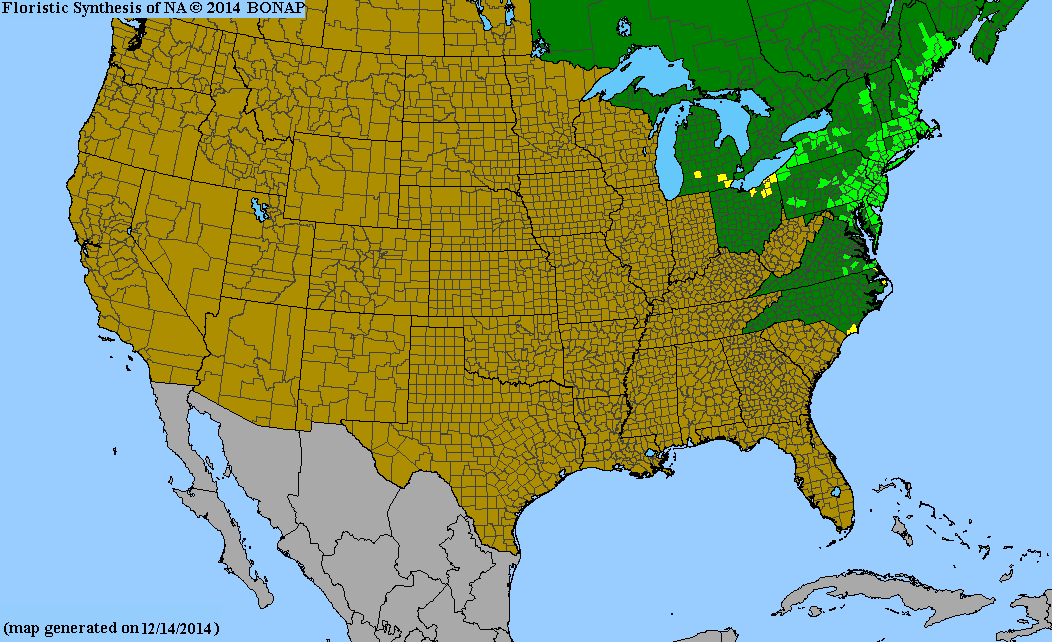
Morella pensylvanica, also known as northern bayberry, is a semi-evergreen shrub found along coastal areas from Canada to Virginia (and barely into North Carolina), highly salt-tolerant and thriving in sandy or rocky soils. It grows 5 to 10 feet tall, with aromatic leaves and waxy gray berries historically used to make bayberry candles.
Application
- Coastal dune and erosion control plantings - highly salt-spray tolerant
- Nutrient-poor sandy soil restoration - nitrogen-fixing pioneer species
- Natural hedges and shrub borders
- Larval host habitat for the Columbia Silkmoth
Growing Conditions / Specification Data
- Light: Full Sun to Part Shade
- Soil/Moisture Tolerance: Sandy, peaty, slightly acidic, well-drained soils; highly salt-spray tolerant, moderately saline and drought tolerant
- Drought Tolerance: Moderate
- Flood Tolerance: Low - A coastal dune and upland shrub; salt spray tolerant but not documented as flood tolerant in the freshwater standing-water sense.
- Plant Type: Shrub
- Mature Height: 4-8 ft.
- Fall Color: Insignificant/None - semi-evergreen, leaves persist tan-colored into winter farther north
- Bloom Color / Period: Insignificant/None; April
- Wetland Indicator Status: FAC (Facultative)
- Native Range: Newfoundland and Quebec south to Virginia, barely into North Carolina
- Hydrology: Dry-Mesic
- Root Depth: Moderate (12-24 in.)
- Growth Rate: Moderate
- Deer Resistance: Yes (Rarely Damaged)
- Shade Tolerance: Intermediate
- Salinity Tolerance: High
- Growth Habit: Multi-stemmed/Thicket-forming - suckering
- USDA Hardiness Zones: 3-7
- Pollinator Value: Larval host, supports butterflies
Planting Guidance
- Dioecious - both male and female plants are needed for berry production. Nitrogen-fixing via root-associated Frankia bacteria, making it a beneficial pioneer species on poor sandy soils.
Share