Nuphar lutea (Spatterdock)
Nuphar lutea (Spatterdock)
Wholesale to the Trade - Please log into your business account.
Wholesale to the Trade - Please log into your business account.
Couldn't load pickup availability
More information on the 2027 crop to come
A confirmed obligate wetland species with genuine ecological function, spatterdock's floating and emergent foliage helps stabilize pond and lake shores while its seeds and tubers directly feed fish and waterfowl - a foundational species for any open-water restoration project.
Species Overview
Nuphar lutea, commonly known as spatterdock or yellow pond lily, is an aquatic perennial native to ponds, lakes, and slow-moving rivers in North America. It has large, heart-shaped leaves that float on or rise above the water's surface, and produces fragrant, cup-shaped, brandy-scented yellow flowers held above the water from May through October.
Application
- Pond and lake restoration - confirmed obligate wetland species
- Shoreline stabilization for ponds and slow-moving water bodies
- Wildlife habitat - seeds and tubers feed fish and waterfowl
- Water garden plantings in 1-5 ft. of clear to slightly muddy water
Growing Conditions / Specification Data
- Light: Full Sun
- Soil/Moisture Tolerance: Aquatic - rooted in mud, growing in standing water up to 5 ft. deep
- Plant Type: Forb (aquatic)
- Fall Color: Insignificant/None
- Bloom Color / Period: Yellow; May-October
- Wetland Indicator Status: OBL (Obligate Wetland)
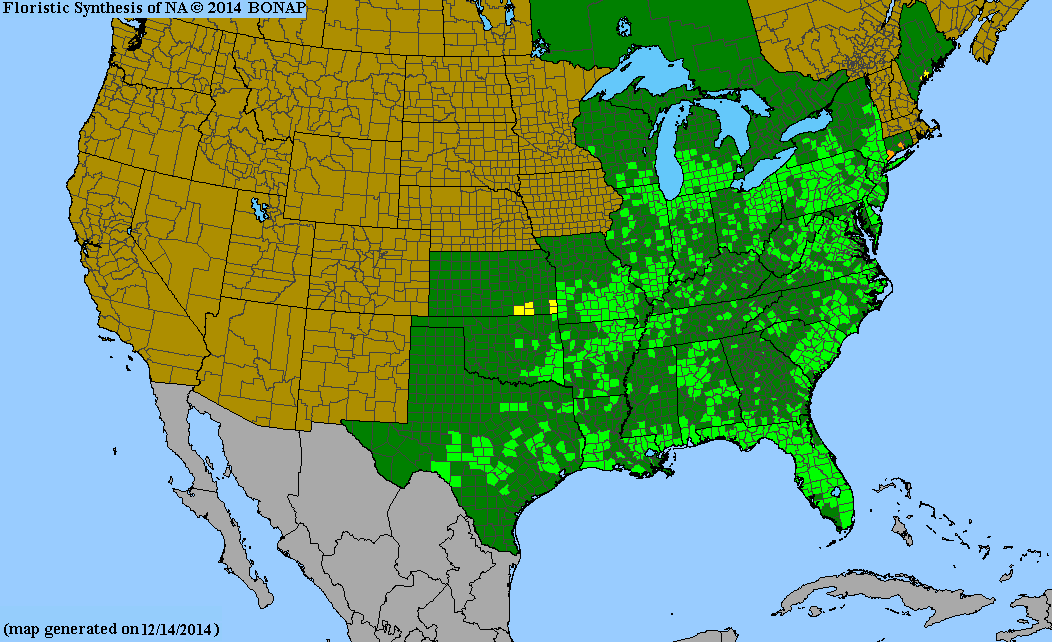
- Native Range: Northeast/Mid-Atlantic (full list)
- Hydrology: Aquatic/Saturated
- Root Depth: Shallow (Under 12 in.) (rhizomatous, rooted in mud substrate rather than soil depth)
- Salinity Tolerance: None
- Growth Rate: Moderate
- Drought Tolerance: None
- Deer Resistance: Yes (Rarely Damaged)
- Flood Tolerance: High - Rated a Wet hydrology species in a formal stormwater vegetation reference table; a true aquatic species rooted in standing water.
- Shade Tolerance: Tolerant - more shade tolerant than most water lilies
- Growth Habit: Spreading - rhizomatous, forms colonies
- USDA Hardiness Zones: 4-9
- Pollinator Value: None significant - see flags
Planting Guidance
- Site in clear to slightly muddy water protected from strong current, waves, or wind; spreads via a robust rhizome system rooted in the mud.
Share