Pachysandra procumbens (Allegheny Spurge)
Pachysandra procumbens (Allegheny Spurge)
Wholesale to the Trade - Please log into your business account.
Wholesale to the Trade - Please log into your business account.
Couldn't load pickup availability
A genuinely superior native alternative to invasive Japanese pachysandra and English ivy, Allegheny spurge is confirmed deer resistant with attractive, marbled foliage that colors further into fall - spreading slowly enough to coexist with other woodland perennials rather than choking them out.
Species Overview
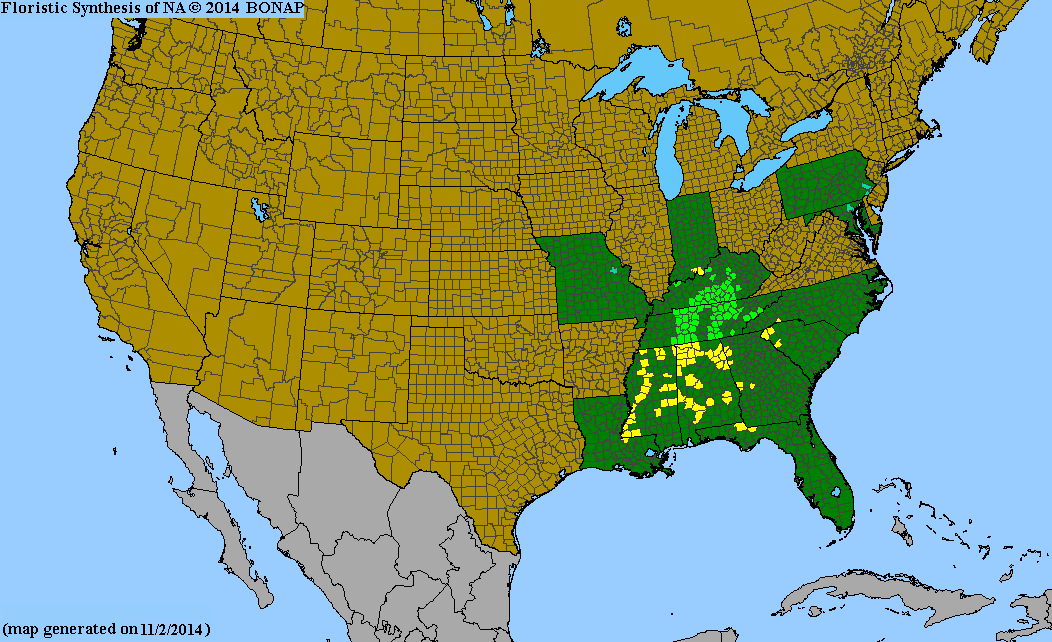
Pachysandra procumbens, or Allegheny spurge, is a shrubby, native ground cover that spreads via underground rhizomes to form a dense carpet of blue-green leaves marbled with silver and purple. Fragrant white to pinkish flower spikes appear in early spring, often before the new leaves emerge. It is native to rich woods primarily on the Cumberland Plateau and surrounding southeastern uplands.
Application
- Native groundcover alternative to invasive Pachysandra terminalis and English ivy
- Shady woodland garden and understory plantings
- Deer-pressured shade sites
- Underplanting for trees and shrubs - non-aggressive, well-behaved spread
Growing Conditions / Specification Data
- Light: Part Shade to Full Shade
- Soil/Moisture Tolerance: Moist to dry, humus-rich, acidic soils; avoid heavy clay and poor drainage
- Drought Tolerance: Moderate - tolerates drought once established
- Flood Tolerance: Low - Rated Moist hydrology in a formal stormwater vegetation reference table, without a wet or flood-tolerant classification.
- Plant Type: Shrub
- Mature Height: 6 in. - 1 ft.
- Fall Color: Bronze
- Bloom Color / Period: Pink, White; March-April
- Wetland Indicator Status: NI (No Indicator) - see flags
- Native Range: Southeastern United States, primarily the Cumberland Plateau of Alabama, Georgia, Kentucky, and Tennessee - not native to the Northeast/Mid-Atlantic (see flags)
- Hydrology: Moist
- Root Depth: Shallow (Under 12 in.)
- Salinity Tolerance: Low
- Growth Rate: Slow
- Shade Tolerance: Tolerant
- Growth Habit: Spreading - rhizomatous
- USDA Hardiness Zones: 5-9
- Deer Resistance: Yes (Rarely Damaged)
- Pollinator Value: Supports bees
Planting Guidance
- Good air circulation and drainage reduce risk of leaf blight and root rot; a slow spreader that forms dense mats without bare spots, unlike its more aggressive Japanese relative.
Share