Photinia pyrifolia (Red Chokeberry)
Photinia pyrifolia (Red Chokeberry)
Wholesale to the Trade - Please log into your business account.
Wholesale to the Trade - Please log into your business account.
Couldn't load pickup availability
More information on the 2027 crop to come
More information on the 2027 crop to come
A confirmed New Jersey native with genuine year-round garden value, red chokeberry pairs showy, winter-persistent berries with confirmed larval host status for both the Hessel's Hairstreak butterfly and the Precious Underwing Moth - tolerant of everything from wet boggy ground to salt exposure.
Species Overview
Photinia pyrifolia (also classified as Aronia arbutifolia), or red chokeberry, is a wildlife-friendly, multiple-stemmed deciduous shrub native to eastern North America, reaching 6 to 12 feet tall. It produces clusters of white to light pink flowers in April, followed by showy red berries that persist through winter, with foliage turning bright red in fall.
Application
- Wildlife hedgerows and native shrub borders - confirmed New Jersey native
- Wet, boggy, and swamp-margin restoration
- Larval host habitat for Hessel's Hairstreak and the Precious Underwing Moth
- Salt-exposed and winter-interest plantings
Growing Conditions / Specification Data
- Light: Full Sun to Part Shade
- Soil/Moisture Tolerance: Wide range, wet and boggy to dry; tolerant of a variety of soils
- Plant Type: Shrub
- Mature Height: 8-15 ft.
- Fall Color: Red
- Bloom Color / Period: Pink, White; April-May
- Wetland Indicator Status: FACW (Facultative Wetland)
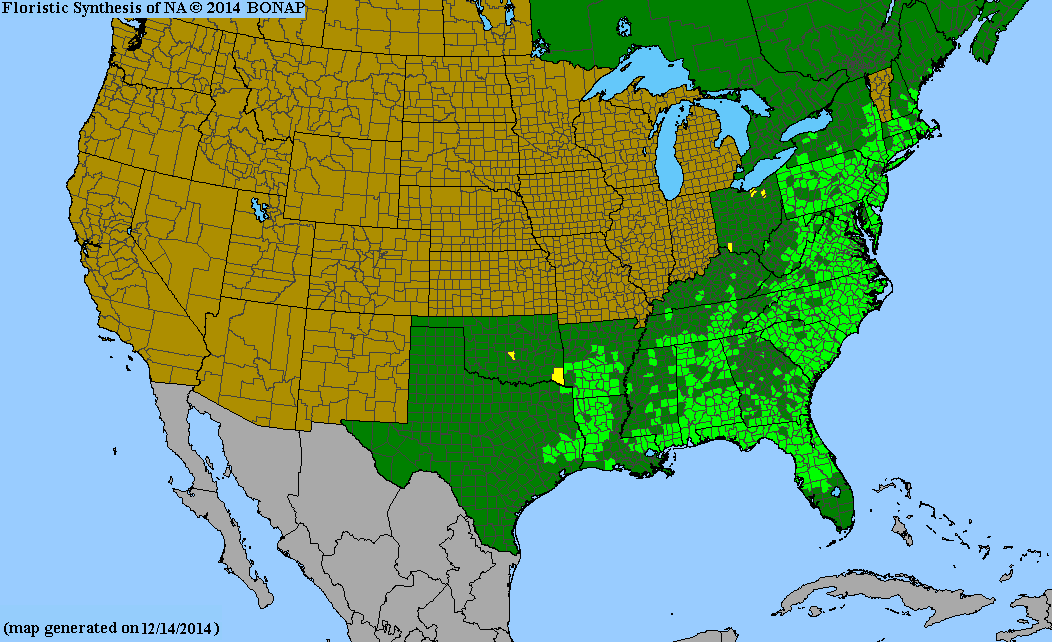
- Native Range: Northeast/Mid-Atlantic (full list)
- Hydrology: Moist-Wet
- Root Depth: Moderate (12-24 in.)
- Salinity Tolerance: Low
- Growth Rate: Moderate
- Drought Tolerance: Moderate
- Flood Tolerance: Moderate - Chokeberries are commonly found in wet thickets and bog margins in addition to drier upland sites; tolerates periodically wet soil.
- Shade Tolerance: Intermediate
- Growth Habit: Multi-stemmed/Thicket-forming - suckering
- USDA Hardiness Zones: 4-9
- Deer Resistance: Some
- Pollinator Value: Larval host, supports butterflies, supports moths
Planting Guidance
- Suckers to form colonies - well suited as a native shrub border; reddish-brown exfoliating bark and persistent red berries add genuine winter interest.
Share