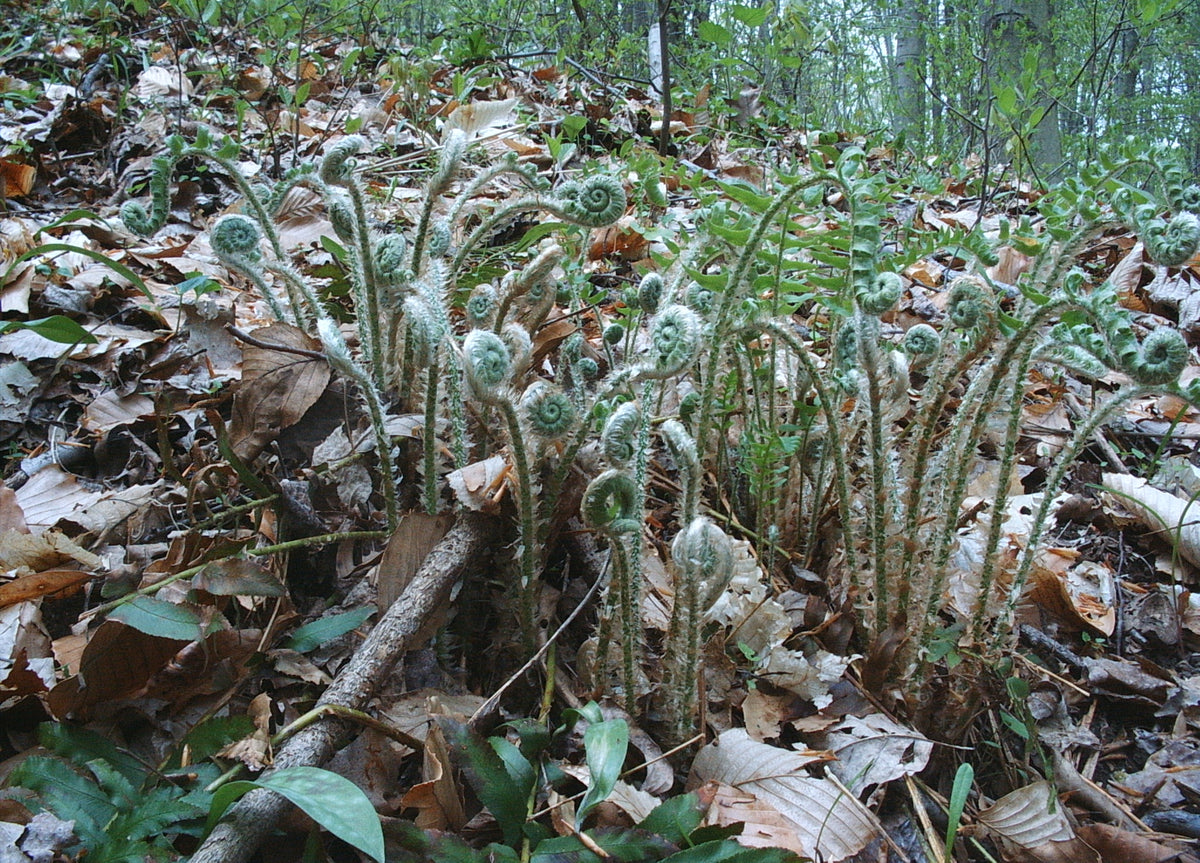
Polystichum acrostichoides (Christmas Fern)
Polystichum acrostichoides (Christmas Fern)
Wholesale to the Trade - Please log into your business account.
Wholesale to the Trade - Please log into your business account.
Couldn't load pickup availability
More information on the 2027 crop to come
One of the most dependable evergreen ferns for dry shade, Christmas fern is confirmed deer- and rabbit-resistant, providing genuine winter structure and cover for small wildlife even through the coldest months when most other perennials have gone dormant.
Species Overview
Polystichum acrostichoides, or Christmas fern, is a robust, evergreen fern native to the eastern half of North America, forming vase-shaped clumps of leathery, lance-shaped fronds up to 2 feet tall. Its fronds often stay green right through the holiday season, giving the plant its festive common name, with distinctive small pinnae resembling tiny Christmas stockings.
Application
- Evergreen shade and woodland garden groundcover
- Dry shade plantings - tolerant where many other species struggle
- Deer-pressured woodland sites
- Erosion control on shaded slopes
Growing Conditions / Specification Data
- Light: Part Shade to Full Shade
- Soil/Moisture Tolerance: Cool, moist, well-drained soil; tolerates dry shade once established
- Plant Type: Fern
- Mature Height: 1-2 ft.
- Fall Color: Insignificant/None - evergreen
- Wetland Indicator Status: NI (No Indicator) - see flags
- Native Range: Northeast/Mid-Atlantic (full list)
- Pollinator Value: None significant - a spore-bearing fern with no flowers; reproduces without pollinators.
- Hydrology: Dry-Mesic
- Root Depth: Shallow (Under 12 in.)
- Salinity Tolerance: Low
- Growth Rate: Slow
- Drought Tolerance: Moderate
- Flood Tolerance: Low - A dry-mesic woodland fern adapted to well-drained soil; not tolerant of standing water.
- Shade Tolerance: Tolerant - impressive tolerance of dry shade
- Growth Habit: Clumping/Mounding - fountain-shaped
- USDA Hardiness Zones: 3-9
- Deer Resistance: Yes (Rarely Damaged)
Planting Guidance
- Rhizomatous but will not spread aggressively or naturalize; clumps simply increase in size over time. Avoid consistently wet or heavy clay soils, which can cause crown rot.
Share