Pontederia cordata (Pickerelweed)
Pontederia cordata (Pickerelweed)
Wholesale to the Trade - Please log into your business account.
Wholesale to the Trade - Please log into your business account.
Couldn't load pickup availability
More information on the 2027 crop to come
A genuine multi-tasker for water gardens and constructed wetlands, pickerelweed supports a documented specialist bee (Florilegus condignus) found almost exclusively on this genus, while its thick rhizome mats actively prevent shoreline erosion and its edible seeds and shoots have a long history of human use.
Species Overview
Pontederia cordata, or pickerelweed, is an aquatic perennial native to shallow waters of ponds, lakes, and streams across North America. It forms colonies of glossy, arrowhead- to heart-shaped leaves emerging from the water, topped by dense spikes of tubular, lavender-blue flowers held well above the foliage, blooming from late spring through fall.
Application
- Pond, lake, and slow-moving water restoration
- Shoreline erosion control - thick, rhizomatous root mats
- Specialist bee habitat (Florilegus condignus) alongside general bee and butterfly forage
- Bioretention cells and rain gardens - nutrient uptake and water clarity improvement
Growing Conditions / Specification Data
- Light: Full Sun to Part Shade
- Soil/Moisture Tolerance: Aquatic - root mass must remain submerged, ideally in 3-12 in. of water; tolerates periodic flooding to 20 in.
- Plant Type: Forb (aquatic)
- Mature Height: 2-4 ft.
- Fall Color: Insignificant/None
- Bloom Color / Period: Purple; June-October
- Wetland Indicator Status: NI (No Indicator) - see flags
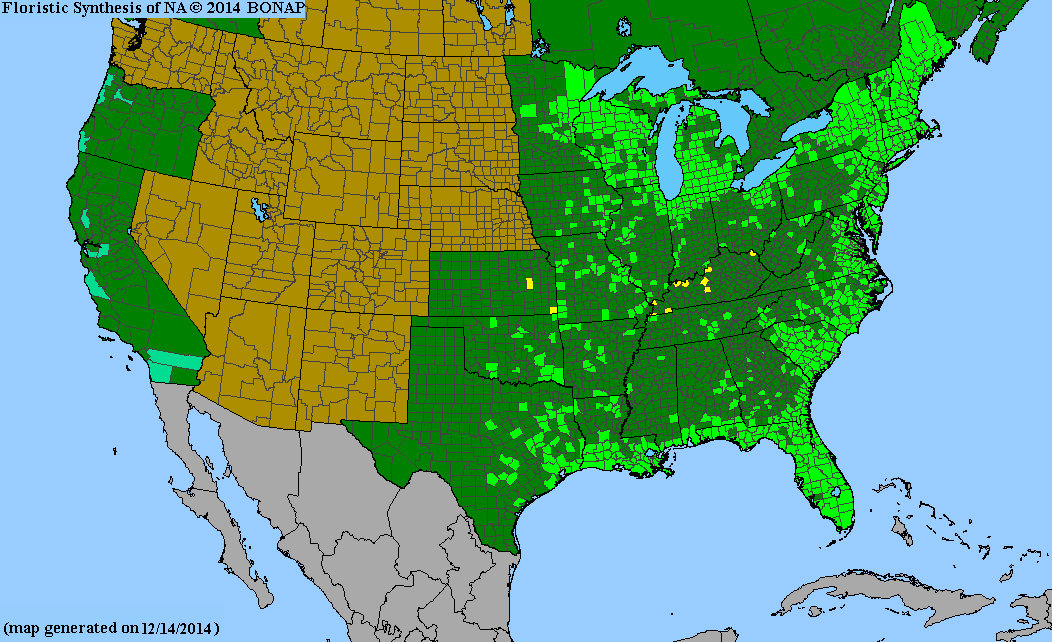
- Native Range: Northeast/Mid-Atlantic (full list)
- Hydrology: Aquatic/Saturated
- Root Depth: Shallow (Under 12 in.)
- Salinity Tolerance: Low
- Growth Rate: Moderate
- Drought Tolerance: None
- Deer Resistance: Yes (Rarely Damaged)
- Flood Tolerance: High - An aquatic marsh plant listed among species that must withstand storm inundation in the shoreline/shallow marsh zone of stormwater ponds; typically found in muck substrate that is usually flooded throughout the growing season.
- Shade Tolerance: Intermediate
- Growth Habit: Spreading - thick rhizomes form large colonies
- USDA Hardiness Zones: 4-10
- Pollinator Value: Supports bees, supports specialist/oligolectic bees, supports butterflies
Planting Guidance
- Install no higher than the average low winter water line; the rhizome mass follows moisture as water levels drop, so plant in a triangle pattern from 2 in. down to 6 in. of water for best establishment.
Share