Prunus maritima (Beach Plum)
Prunus maritima (Beach Plum)
Wholesale to the Trade - Please log into your business account.
Wholesale to the Trade - Please log into your business account.
Couldn't load pickup availability
More information on the 2027 crop to come
More information on the 2027 crop to come
A genuine coastal specialty with a real culinary following, beach plum's edible fruit has fueled a foraging and local-food revival, while the broader Prunus genus it belongs to supports over 400 documented species of butterflies and moths - real ecological weight behind a classic dune shrub.
Species Overview
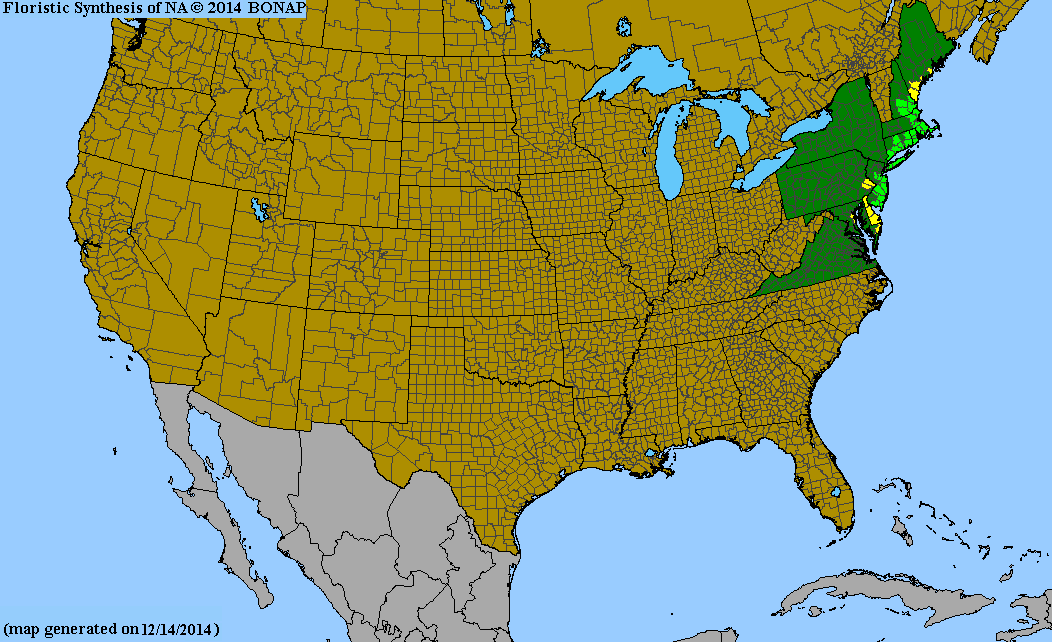
Prunus maritima, or beach plum, is a rounded, densely branching deciduous shrub native to dunes and sandy coastal soils from New Brunswick to New Jersey. It produces profuse white (sometimes pink-tinged) flowers from mid-spring to early summer, followed by small, tart, edible plums that ripen to dark reddish-purple by late summer.
Application
- Coastal dune and beach restoration - confirmed salt tolerant
- Sandy, well-drained soil plantings
- Larval host habitat as part of the broader Prunus genus (400+ documented Lepidoptera)
- Foraging and local-food plantings - fruit used for jams and jellies
Growing Conditions / Specification Data
- Light: Full Sun
- Soil/Moisture Tolerance: Sandy or gravelly soils, dry to moist; salt tolerant
- Plant Type: Shrub
- Mature Height: 4-8 ft.
- Bloom Color / Period: White; April-June
- Wetland Indicator Status: NI (No Indicator) - see flags
- Native Range: Northeast/Mid-Atlantic (full list) - New Brunswick to New Jersey specifically
- Hydrology: Dry-Mesic
- Root Depth: Moderate (12-24 in.)
- Growth Rate: Moderate
- Drought Tolerance: High
- Deer Resistance: Some
- Shade Tolerance: Intolerant
- Salinity Tolerance: High
- Flood Tolerance: Low - A dune species adapted to well-drained sand; not tolerant of standing water.
- Growth Habit: Multi-stemmed/Thicket-forming - suckering coastal shrub
- USDA Hardiness Zones: 3-7
- Pollinator Value: Larval host, supports bees, supports butterflies, supports moths
Planting Guidance
- IMPORTANT: seed pits are toxic due to hydrocyanic acid content - fruit flesh is edible but pits should not be consumed. Susceptible to the same pests and diseases as other Prunus species, including plum curculio and black knot.
Share