Pycnanthemum virginianum (Virginia Mountain Mint)
Pycnanthemum virginianum (Virginia Mountain Mint)
Wholesale to the Trade - Please log into your business account.
Wholesale to the Trade - Please log into your business account.
Couldn't load pickup availability
More information on the 2027 crop to come
A confirmed deer-resistant pollinator essential, Virginia mountain mint is a named larval host for the Pearl Crescent butterfly while drawing honeybees, native bees, and beetles in clouds throughout its long summer bloom - and its high pulegone content doubles as a natural mosquito repellent when rubbed on skin.
Species Overview
Pycnanthemum virginianum, commonly called Virginia or common mountain mint, is a branching, herbaceous perennial in the mint family that grows to 3 feet tall with a bushy habit. Numerous small white flowers with purple dots bloom in sequence at the ends of upper stems in midsummer, with the entire plant emitting a strong mint scent when crushed.
Application
- Pollinator garden essential - honeybees, native bees, and butterflies all documented
- Larval host habitat for the Pearl Crescent butterfly
- Deer-pressured meadow, prairie, and rain garden plantings
- Natural mosquito-repellent plantings - high pulegone content
Growing Conditions / Specification Data
- Light: Full Sun to Part Shade
- Soil/Moisture Tolerance: Moist to dry soils; tolerates sand, clay, gravel, or loam
- Drought Tolerance: Moderate
- Flood Tolerance: Moderate - A moist-to-dry meadow species, consistent with the general genus (Pycnanthemum) pattern; tolerates periodically wet soil.
- Plant Type: Forb
- Mature Height: 2-4 ft.
- Fall Color: Insignificant/None
- Bloom Color / Period: White, Purple; June-August
- Wetland Indicator Status: NI (No Indicator) - see flags
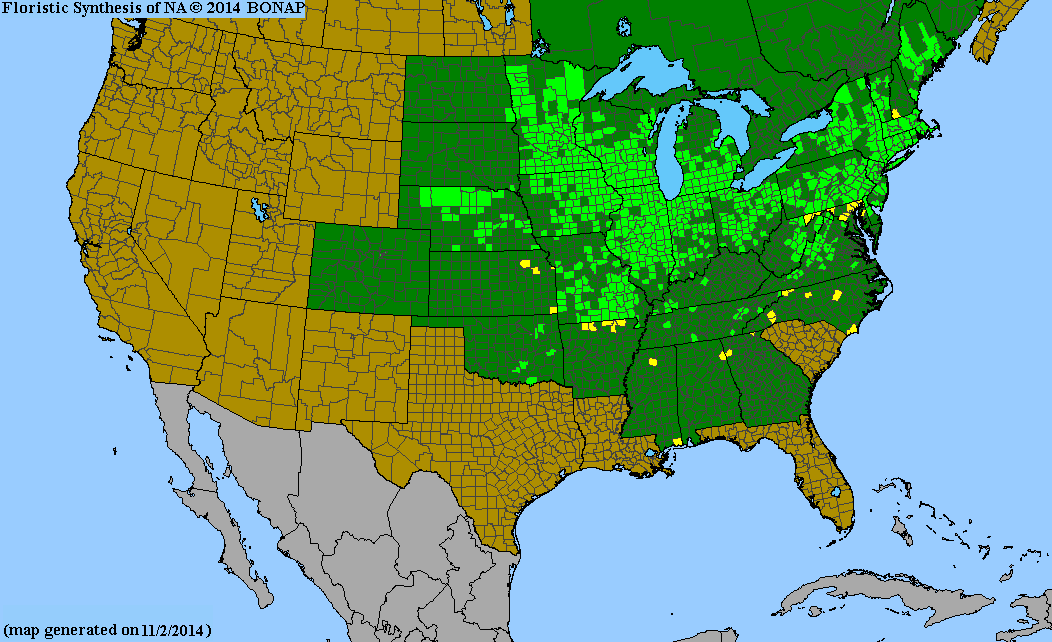
- Native Range: Northeast/Mid-Atlantic (full list)
- Hydrology: Mesic-Moist
- Root Depth: Shallow (Under 12 in.)
- Salinity Tolerance: Low
- Growth Rate: Rapid
- Shade Tolerance: Intermediate
- Growth Habit: Spreading - rhizomatous
- USDA Hardiness Zones: 3-8
- Deer Resistance: Yes (Rarely Damaged)
- Pollinator Value: Larval host, supports bees, supports butterflies
Planting Guidance
- Spreads by rhizome to form dense, weed-suppressing colonies; during drought, lower leaves may yellow and drop without harming the plant overall.
Share