Quercus ilicifolia (Bear Oak)
Quercus ilicifolia (Bear Oak)
Wholesale to the Trade - Please log into your business account.
Wholesale to the Trade - Please log into your business account.
Couldn't load pickup availability
An ecological cornerstone of the New Jersey Pine Barrens, bear oak is the primary or sole larval host for an estimated 29 percent of rare or endangered Lepidoptera in its southern range, including the Eastern Buckmoth and Sleepy Duskywing - a genuinely disproportionate ecological footprint for such a small, scrubby tree.
Species Overview
Quercus ilicifolia, or bear oak, is a small, shrubby, deciduous oak native to the eastern United States, forming gnarled thickets typically under 20 feet tall in dry, sandy, nutrient-poor soils. It is common in New Jersey's Pine Barrens and the pine barrens of Long Island, with holly-like, deeply lobed leaves and small acorns that give the species its common name for their appeal to bears.
Application
- Pine Barrens and dry, sandy, acidic soil restoration - common regional species
- Fire-adapted plantings - early colonizer after wildfire and disturbance
- Larval host habitat for the Eastern Buckmoth, Sleepy Duskywing, and numerous rare Lepidoptera
- Thicket and wildlife cover plantings on poor, nutrient-depleted soils
Growing Conditions / Specification Data
- Light: Full Sun - intolerant of shade
- Soil/Moisture Tolerance: Dry, sandy, acidic, nutrient-poor soils; intolerant of salt
- Plant Type: Shrub
- Mature Height: 8-15 ft.
- Fall Color: Red-Purple
- Wetland Indicator Status: NI (No Indicator) - see flags
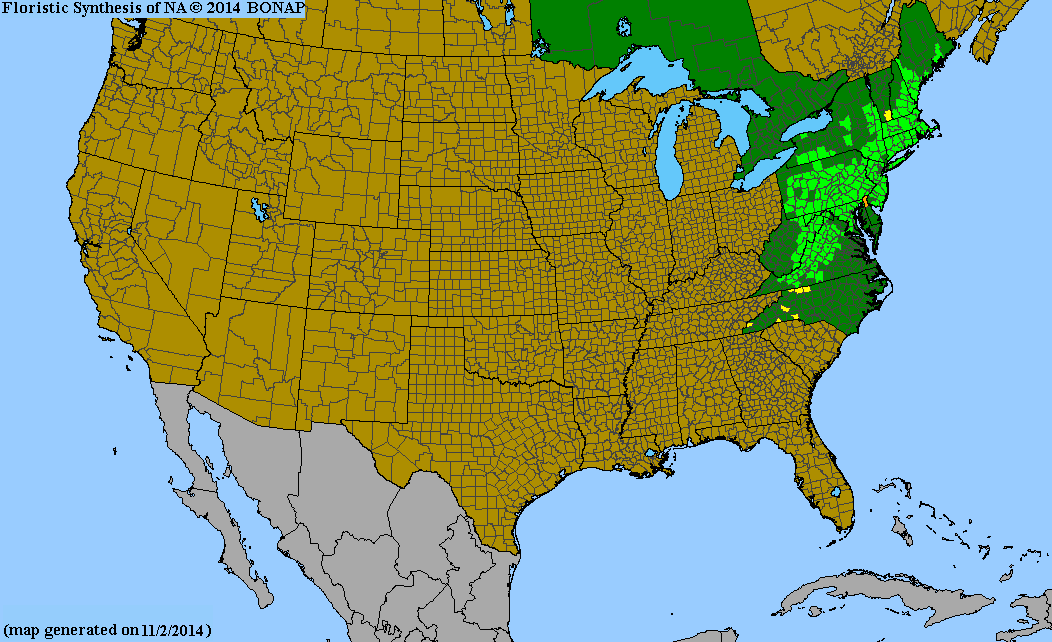
- Native Range: Northeast/Mid-Atlantic (full list) - common in NJ Pine Barrens
- Hydrology: Dry-Mesic
- Root Depth: Deep (24-36 in.)
- Salinity Tolerance: Low
- Growth Rate: Slow
- Drought Tolerance: High
- Deer Resistance: Some
- Flood Tolerance: Low - A dry, sandy-soil Pine Barrens scrub oak; not tolerant of standing water.
- Shade Tolerance: Intolerant
- Growth Habit: Multi-stemmed/Thicket-forming - scrubby Pine Barrens form
- USDA Hardiness Zones: 5-9
- Pollinator Value: Larval host, supports butterflies, supports moths
Planting Guidance
- A fire-adapted, early-successional species that regenerates after burning and heavy disturbance; not intended as a long-lived specimen tree but as a component of barrens and scrub restoration.
Share