Quercus marilandica (Black-Jack Oak)
Quercus marilandica (Black-Jack Oak)
Wholesale to the Trade - Please log into your business account.
Wholesale to the Trade - Please log into your business account.
Couldn't load pickup availability
More information on the 2027 crop to come
A genuine specialist for the toughest sites in the catalog, blackjack oak's confirmed high drought tolerance and tolerance of severely degraded soils make it a proven choice for reclamation work where more valuable timber oaks simply won't establish.
Species Overview
Quercus marilandica, or blackjack oak, is a small, rugged deciduous tree native to the southeastern United States, typically reaching 20 to 50 feet with a short trunk and densely contorted, dark, nearly black branches. It thrives in dry, sandy, or rocky, poor soils where few other trees can establish, with thick, leathery, three- to five-lobed leaves that are dark green above and rusty beneath.
Application
- Reclamation plantings on poor, degraded, or nutrient-depleted soils
- Dry, sandy, or rocky upland restoration
- Oak savanna and scrub habitat component plantings
- Wildlife cover and food source on challenging sites
Growing Conditions / Specification Data
- Light: Full Sun
- Soil/Moisture Tolerance: Average to dry, well-drained, acidic soils; sandy, rocky, or clay; tolerates severely degraded soils
- Drought Tolerance: High
- Flood Tolerance: Low - A dry, poor-soil oak; not documented as flood tolerant.
- Plant Type: Tree
- Mature Height: 25-50 ft.
- Fall Color: Red, Yellow
- Wetland Indicator Status: NI (No Indicator) - see flags
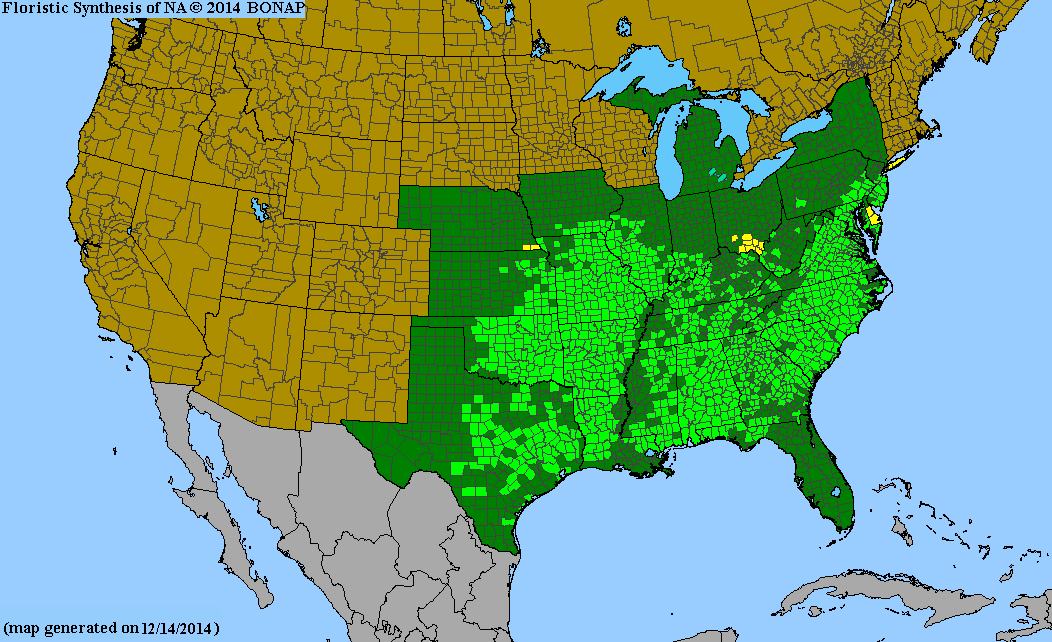
- Native Range: Northeast/Mid-Atlantic (full list) - at the northern edge of its range in this region
- Pollinator Value: Keystone species - though the wind-pollinated flowers hold no nectar value, oaks as a genus are among the most important keystone plants for supporting caterpillar and moth diversity, feeding the food web that songbirds depend on.
- Hydrology: Dry-Mesic
- Root Depth: Deep (24-36 in.)
- Salinity Tolerance: Low
- Growth Rate: Slow
- Deer Resistance: Some
- Shade Tolerance: Intolerant
- Growth Habit: Rounded
- USDA Hardiness Zones: 6-9
Planting Guidance
- Slow-growing but long-lived (up to 200 years); rarely used ornamentally but valuable in naturalized or woodland restoration settings on the poorest available soils.
Share