Quercus prinus (Chestnut Oak)
Wholesale to the Trade - Please log into your business account.
Couldn't load pickup availability
More information on the 2027 crop to come
The dominant ridgetop tree of much of the Appalachian range, chestnut oak's massively ridged bark was historically prized for leather tanning, while its large, sweet acorns and documented status as a larval host for the Imperial Moth and six named hairstreak and duskywing butterflies make it a genuine wildlife anchor on the poorest, rockiest sites.
Species Overview
Quercus prinus (also classified as Quercus montana), or chestnut oak, is a medium to large deciduous tree native to eastern North America, typically growing 50 to 70 feet tall (occasionally to 100 feet). It is a member of the white oak group, thriving on rocky ridges, dry slopes, and well-drained upland soils, often dominating Appalachian forests, with the thickest, most deeply-ridged bark of any eastern North American oak.
Application
- Rocky ridge and dry slope restoration - a dominant Appalachian ridgetop species
- Well-drained upland soil plantings
- Larval host habitat for the Imperial Moth and six named butterflies
- Wildlife-priority plantings - large, sweet acorns favored by deer and other wildlife
Growing Conditions / Specification Data
- Light: Full Sun to Part Shade
- Soil/Moisture Tolerance: Rich, moist, well-drained soil preferred; tolerates poor, drier soils and rocky ridges
- Plant Type: Tree
- Mature Height: 50-80 ft.
- Fall Color: Yellow
- Wetland Indicator Status: NI (No Indicator) - see flags
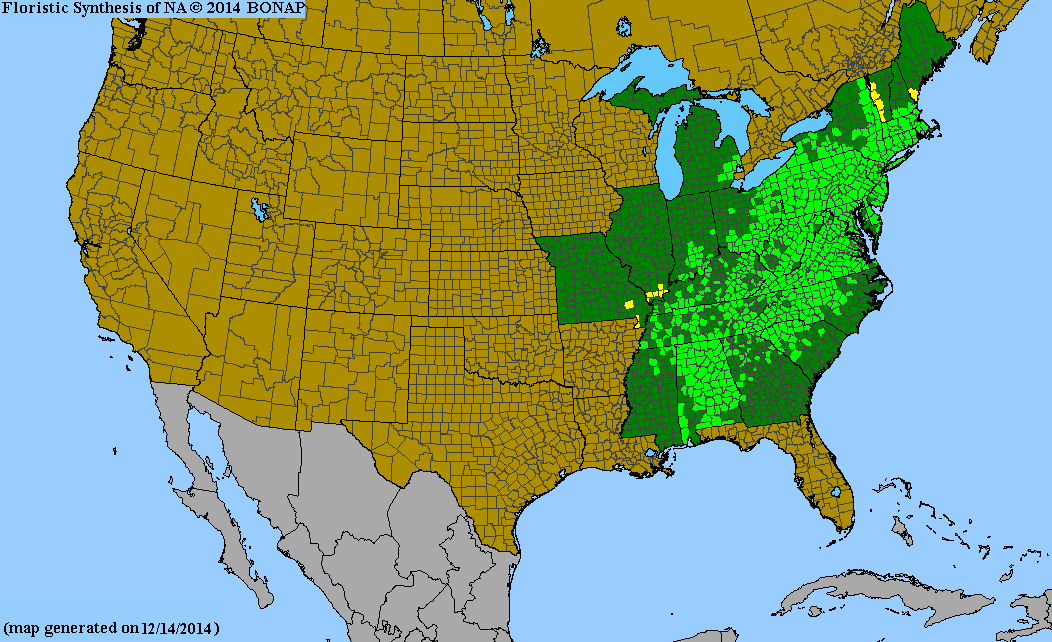
- Native Range: Northeast/Mid-Atlantic (full list)
- Hydrology: Dry-Mesic
- Root Depth: Deep (24-36 in.)
- Salinity Tolerance: Low
- Growth Rate: Slow
- Drought Tolerance: High
- Deer Resistance: Some
- Flood Tolerance: Low - A dry-ridge specialist oak; not tolerant of standing water.
- Shade Tolerance: Intolerant
- Growth Habit: Rounded
- USDA Hardiness Zones: 4-8
- Pollinator Value: Larval host, supports butterflies, supports moths
Planting Guidance
- Bark is rich in tannins and was historically used in leather tanning; wood is hard and durable, used for fencing, railroad ties, and fuel.
Share