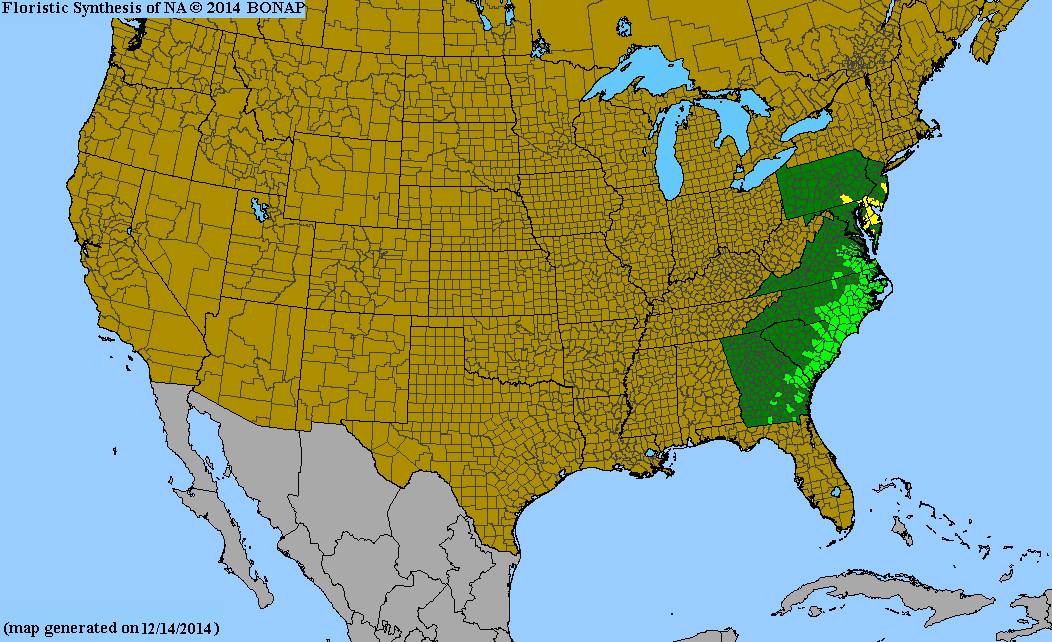
Rhododendron atlanticum (Coastal Azalea)
Rhododendron atlanticum (Coastal Azalea)
Wholesale to the Trade - Please log into your business account.
Wholesale to the Trade - Please log into your business account.
Couldn't load pickup availability
More information on the 2027 crop to come
A genuinely tough colony-former with New Jersey at the very northern edge of its native range, coastal azalea's potent musky fragrance has made it a foundational breeding parent for sweet-smelling deciduous azalea cultivars - while a documented specialist bee relies on the genus specifically.
Species Overview
Rhododendron atlanticum, commonly called coastal azalea or dwarf azalea, is a compact, loosely-branched, stoloniferous deciduous shrub native to coastal plain areas from New Jersey south to Georgia. It typically matures to 2 to 3 feet tall, producing intensely fragrant, funnel-shaped white flowers often flushed with pink in clusters of 3 to 13 in April, at or slightly before new leaves emerge.
Application
- Fragrant woodland and pollinator garden plantings - potent musky fragrance
- Sandy soil colonizing plantings - spreads by underground stolons
- Specialist bee habitat (Andrena cornelli) alongside butterflies and hummingbirds
- Azalea breeding stock - prized parent for fragrant cultivars
Growing Conditions / Specification Data
- Light: Part Shade - morning sun with afternoon filtered shade preferred
- Soil/Moisture Tolerance: Well-drained, sandy, acidic soil kept consistently moist
- Plant Type: Shrub
- Mature Height: 2-4 ft.
- Fall Color: Insignificant/None
- Bloom Color / Period: White, Pink; April-May
- Wetland Indicator Status: NI (No Indicator) - see flags
- Native Range: Northeast/Mid-Atlantic (full list) - New Jersey marks the species' northern range limit
- Hydrology: Mesic-Moist
- Root Depth: Moderate (12-24 in.)
- Salinity Tolerance: Low
- Growth Rate: Moderate
- Drought Tolerance: Low
- Flood Tolerance: Moderate - A moist-woodland, suckering understory azalea tolerant of periodically wet soil.
- Shade Tolerance: Tolerant
- Growth Habit: Multi-stemmed/Thicket-forming - suckering deciduous azalea
- USDA Hardiness Zones: 5-8
- Deer Resistance: No (Frequently Damaged)
- Pollinator Value: Supports bees, supports specialist/oligolectic bees, supports butterflies, supports hummingbirds
Planting Guidance
- IMPORTANT: all plant parts are toxic if ingested, consistent with the broader Rhododendron genus. A genuinely tough, fire-adapted plant - resprouts vigorously after overgrazing or forest fire.
Share