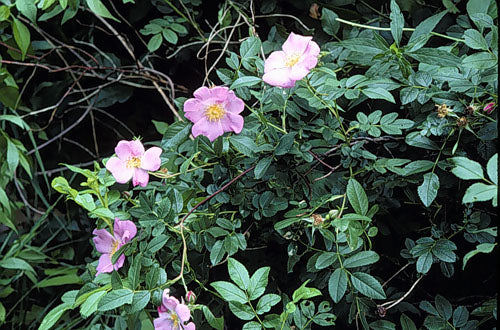
Rosa virginiana (Virginia Rose)
Rosa virginiana (Virginia Rose)
Wholesale to the Trade - Please log into your business account.
Wholesale to the Trade - Please log into your business account.
Couldn't load pickup availability
More information on the 2027 crop to come
More information on the 2027 crop to come
Recipient of the Royal Horticultural Society's Award of Garden Merit and confirmed salt tolerant, Virginia rose is the classic all-rounder among native roses - thriving along roadsides, beach dunes, and parking lot plantings while its easily accessible pollen makes it a genuine draw for native bees.
Species Overview
Rosa virginiana, commonly called Virginia rose, is the most common wild rose in eastern North America, a fast-growing, cold-hardy, deciduous suckering shrub reaching 4 to 6 feet tall. Fragrant, single, pale to bright pink flowers appear in summer, followed by pumpkin-shaped red fruits that persist for months, with dark green foliage turning fiery orange-red in fall.
Application
- Coastal and roadside plantings - confirmed salt tolerant
- Erosion control and dense thicket wildlife plantings
- Native bee habitat - easily accessible pollen
- Naturalized hedges and border plantings
Growing Conditions / Specification Data
- Light: Full Sun to Part Shade
- Soil/Moisture Tolerance: Moist, well-drained soils; tolerant of poor, sandy soils
- Drought Tolerance: High
- Flood Tolerance: Moderate - A moist meadow and thicket species tolerant of periodically wet soil.
- Plant Type: Shrub
- Mature Height: 4-8 ft.
- Fall Color: Yellow, Orange, Red
- Bloom Color / Period: Pink; June-August
- Wetland Indicator Status: NI (No Indicator) - see flags
- Native Range: Northeast/Mid-Atlantic (full list)
- Hydrology: Mesic-Moist
- Root Depth: Moderate (12-24 in.)
- Salinity Tolerance: Low
- Growth Rate: Moderate
- Deer Resistance: Some
- Shade Tolerance: Intermediate
- Growth Habit: Spreading - suckering
- USDA Hardiness Zones: 3-7
- Pollinator Value: Supports bees, supports butterflies, supports hummingbirds
Planting Guidance
- Recipient of the Royal Horticultural Society's Award of Garden Merit; tolerates wind but not direct maritime/salt-spray exposure. Rose hips are rich in vitamin C and used for jams and tea.
Share