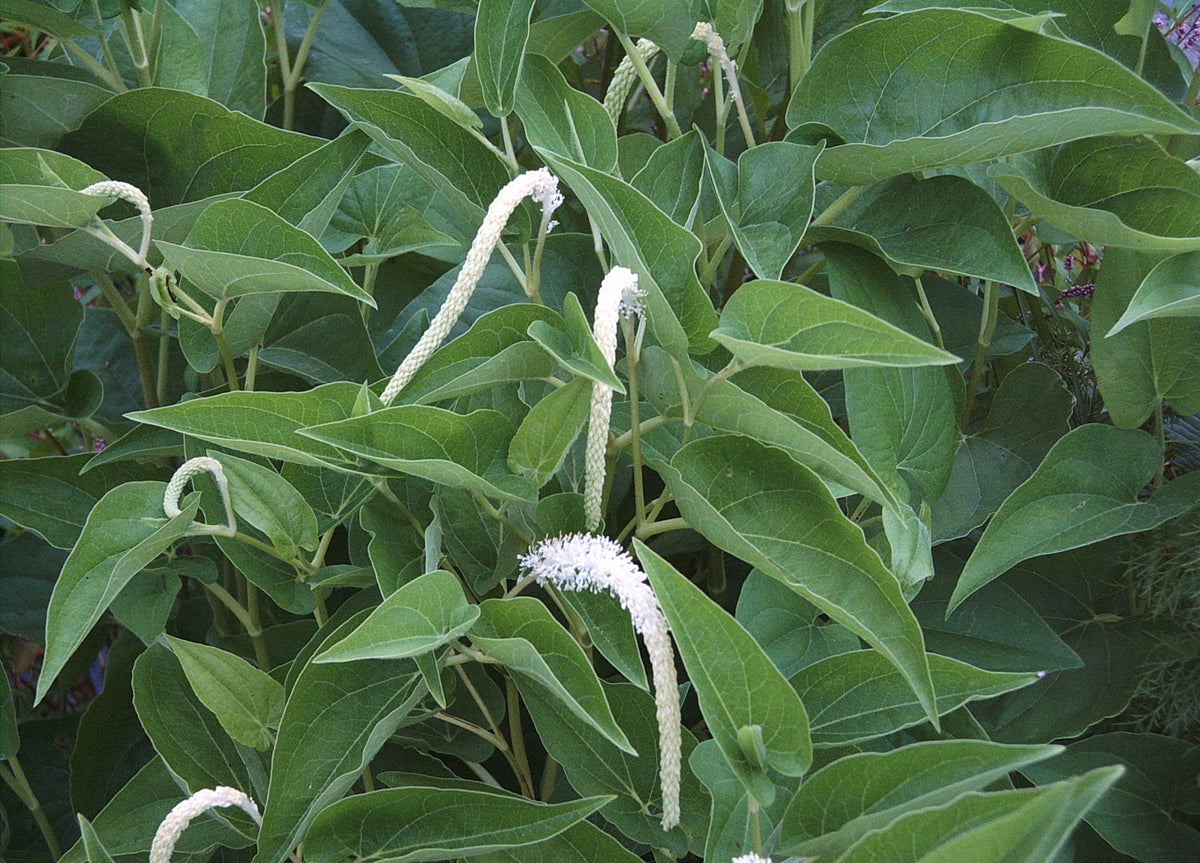
Saururus cernuus (Lizards Tail)
Saururus cernuus (Lizards Tail)
Wholesale to the Trade - Please log into your business account.
Wholesale to the Trade - Please log into your business account.
Couldn't load pickup availability
More information on the 2027 crop to come
A distinctive and easily identified wetland plant - no other member of the Lizard's Tail family occurs anywhere in the eastern United States - lizard's tail forms impressive colonizing stands whose tangled rhizome mass genuinely earns its keep for erosion control and bank stabilization.
Species Overview
Saururus cernuus, or lizard's tail, is a rhizomatous, marginal aquatic perennial native to the eastern United States, growing 1.5 to 4 feet tall. It produces distinctive nodding, slender spikes of tiny fragrant white flowers resembling a lizard's tail from the axils of heart-shaped, citrus-scented leaves, thriving in shallow water and consistently moist to wet soils.
Application
- Pond margin, bog garden, and water garden plantings
- Erosion control and bank stabilization - dense, tangled rhizome mass
- Rain garden and stormwater management plantings
- Shaded wetland restoration - tolerates full shade to full sun
Growing Conditions / Specification Data
- Light: Full Sun to Full Shade
- Soil/Moisture Tolerance: Consistently wet soils or shallow water up to 4 in. deep
- Plant Type: Forb (aquatic)
- Mature Height: 2-4 ft.
- Fall Color: Insignificant/None
- Bloom Color / Period: White; June-August
- Wetland Indicator Status: NI (No Indicator) - see flags
- Native Range: Northeast/Mid-Atlantic (full list)
- Hydrology: Moist-Wet
- Root Depth: Shallow (Under 12 in.)
- Salinity Tolerance: Low
- Growth Rate: Rapid
- Drought Tolerance: Low
- Deer Resistance: Some
- Flood Tolerance: High - Forms near-monotypic stands in wetland substrate that is often flooded, occurring on sand or silt in inundated depressions along lakeshores and riparian zones.
- Shade Tolerance: Intermediate
- Growth Habit: Spreading - rhizomatous
- USDA Hardiness Zones: 4-9
- Pollinator Value: Supports bees
Planting Guidance
- IMPORTANT: toxic if ingested in large quantities, despite historical medicinal use by some Native American communities for inflammation. Does not tolerate persistent saltwater environments. Spreads aggressively by rhizome and can outcompete other species - place accordingly.
Share