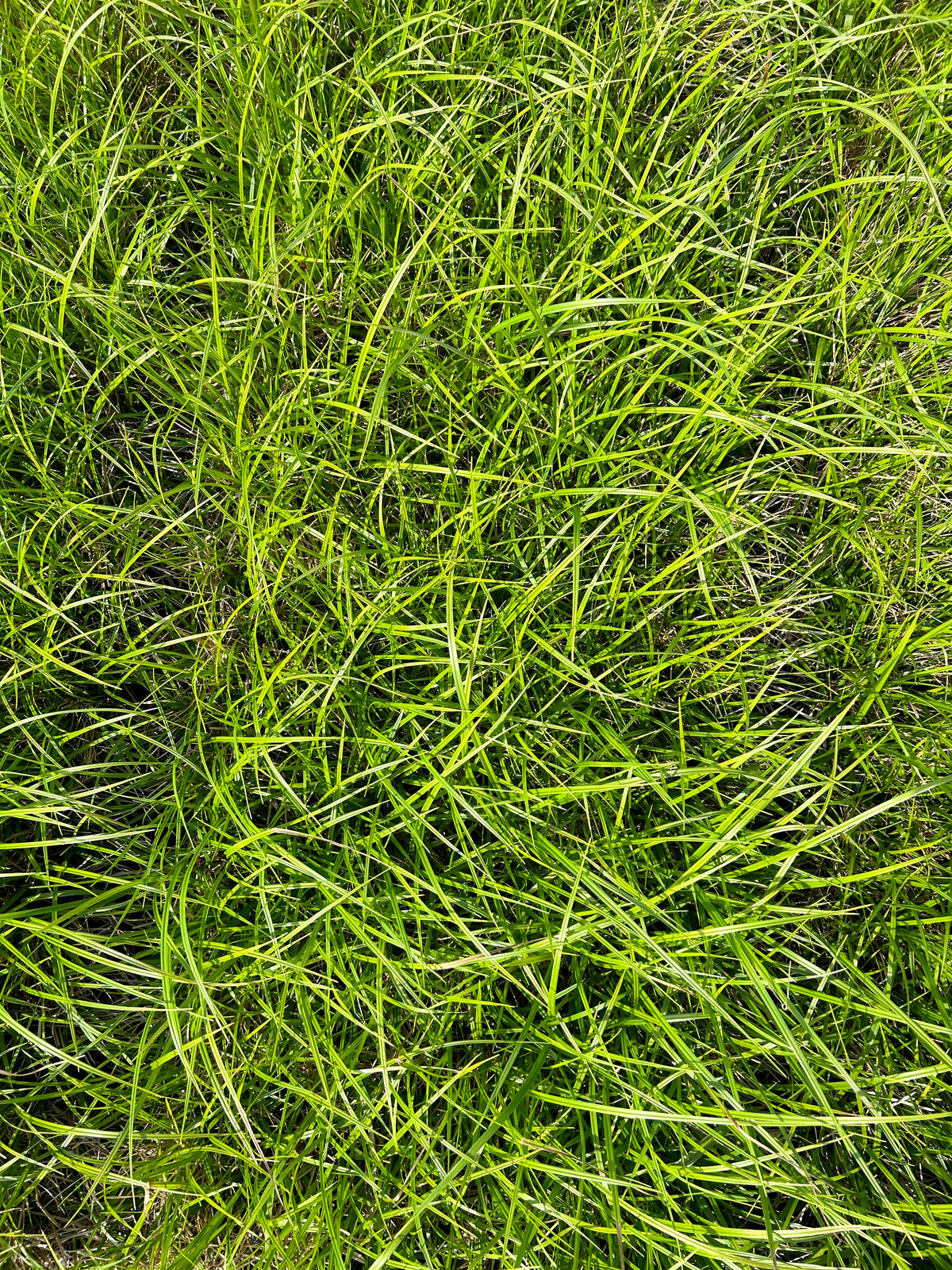
Schoenoplectus atrovirens (Green Bulrush)
Schoenoplectus atrovirens (Green Bulrush)
Wholesale to the Trade - Please log into your business account.
Wholesale to the Trade - Please log into your business account.
Couldn't load pickup availability
More information on the 2027 crop to come
A genuinely versatile wetland workhorse tolerant of fluctuating water levels, green bulrush is used extensively in wetland restoration for both erosion control and water filtration - a reliable structural anchor plant for the toughest, wettest sites in a restoration plan.
Species Overview
Schoenoplectus atrovirens (also classified as Scirpus atrovirens), or green bulrush, is a native wetland sedge found in marshes, ditches, and streambanks throughout North America, growing 2.5 to 5 feet tall. Tall, slender stems support branching clusters of small, spherical spikelet heads that transition from gray-green to blackish-brown as they mature through summer.
Application
- Wetland restoration - erosion control and water filtration
- Marsh, ditch, and streambank naturalization
- Riparian buffer plantings - tolerant of fluctuating water levels
- Waterfowl cover and nesting material habitat
Growing Conditions / Specification Data
- Light: Full Sun to Part Shade
- Soil/Moisture Tolerance: Wet soils or shallow water; tolerant of fluctuating water levels
- Plant Type: Graminoid
- Mature Height: 2-4 ft.
- Fall Color: Insignificant/None
- Wetland Indicator Status: NI (No Indicator) - see flags
- Native Range: Northeast/Mid-Atlantic (full list)
- Pollinator Value: None significant - wind-pollinated wetland sedge/bulrush, no meaningful nectar or pollen resource.
- Hydrology: Moist-Wet
- Root Depth: Shallow (Under 12 in.)
- Salinity Tolerance: Low
- Growth Rate: Moderate
- Drought Tolerance: Low
- Deer Resistance: Yes (Rarely Damaged)
- Flood Tolerance: High - A wetland bulrush (Schoenoplectus/Scirpus genus), consistent with the genus' well-documented wetland-obligate pattern.
- Shade Tolerance: Intermediate
- Growth Habit: Clumping/Mounding
- USDA Hardiness Zones: 3-8
Planting Guidance
- Grasslike and semi-evergreen; foliage typically present year-round in favorable sites. An aggressive colonizer, valuable specifically for erosion control projects on the wettest, most challenging sites.
Share