Solidago caesia (Blue-Stemmed Goldenrod)
Solidago caesia (Blue-Stemmed Goldenrod)
Wholesale to the Trade - Please log into your business account.
Wholesale to the Trade - Please log into your business account.
Couldn't load pickup availability
A confirmed deer-resistant woodland specialist that genuinely doesn't spread aggressively like most goldenrods, blue-stemmed goldenrod is a documented larval host for the Wavy-Lined Emerald moth and supports an exceptional ten named specialist bee species - real ecological substance behind its well-behaved, shade-tolerant reputation.
Species Overview
Solidago caesia, commonly called blue-stemmed or wreath goldenrod, is a native woodland perennial found in forests, woodland borders, and drier stream edges, typically growing 1.5 to 3 feet tall on arching, wiry, greenish-purple stems. Small clusters of bright yellow flowers appear in the leaf axils along the length of the stem from late summer into fall, distinguishing it from most other goldenrods, which bloom in terminal clusters.
Application
- Woodland garden and shaded border plantings - among the few shade-tolerant goldenrods
- Larval host habitat for the Wavy-Lined Emerald moth
- Specialist bee habitat - supports ten named Andrena, Perdita, Melissodes, and Colletes species
- Late-season pollinator plantings under open tree canopy
Growing Conditions / Specification Data
- Light: Full Sun to Part Shade
- Soil/Moisture Tolerance: Mesic to dry soils; tolerates loamy, clay, or rocky soils
- Drought Tolerance: High
- Flood Tolerance: Low - A shade-tolerant woodland goldenrod, atypical for the genus; not documented as flood tolerant.
- Plant Type: Forb
- Mature Height: 2-4 ft.
- Fall Color: Insignificant/None
- Bloom Color / Period: Yellow; August-October
- Wetland Indicator Status: FACU (Facultative Upland)
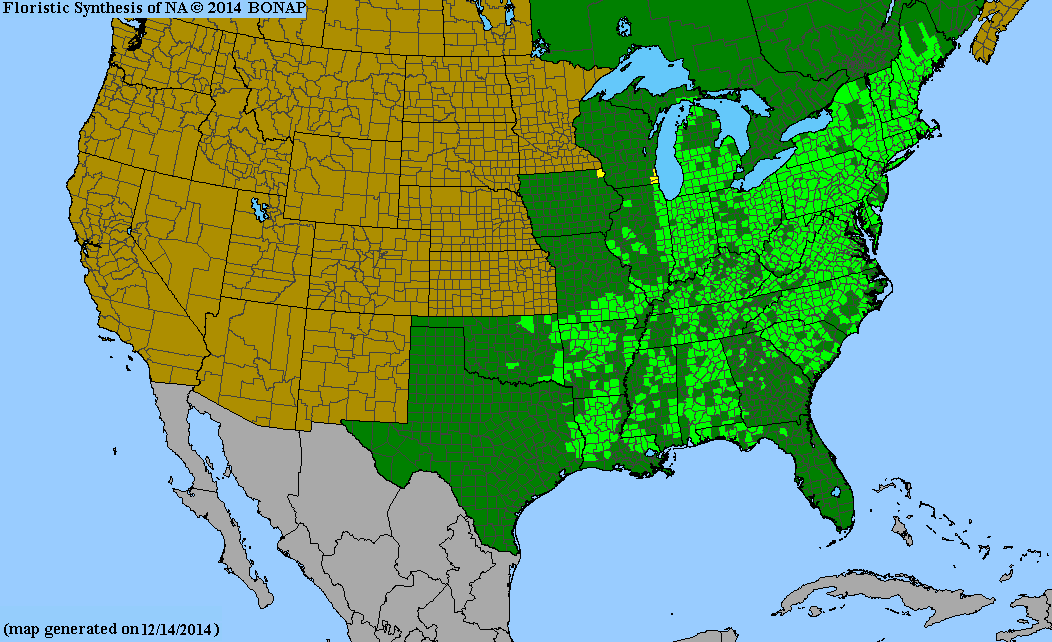
- Native Range: Northeast/Mid-Atlantic (full list)
- Hydrology: Dry-Mesic
- Root Depth: Moderate (12-24 in.)
- Salinity Tolerance: Low
- Growth Rate: Moderate
- Shade Tolerance: Tolerant - one of the few shade-tolerant goldenrods
- Growth Habit: Upright
- USDA Hardiness Zones: 3-8
- Deer Resistance: Yes (Rarely Damaged)
- Pollinator Value: Larval host, supports bees, supports specialist/oligolectic bees, supports butterflies, supports moths
Planting Guidance
- Unlike most goldenrods, spreads only modestly by rhizome or self-seeding rather than aggressively colonizing - well-suited to smaller garden settings. Flowering and form are best with roughly 3 hours of sun; stems may arch or bend in dense shade, requiring occasional pruning.
Share