Solidago gigantea (Giant Goldenrod)
Solidago gigantea (Giant Goldenrod)
Wholesale to the Trade - Please log into your business account.
Wholesale to the Trade - Please log into your business account.
Couldn't load pickup availability
More information on the 2027 crop to come
A confirmed critical late-season nectar source for bees, butterflies, and other pollinators, giant goldenrod's smooth, waxy stems make it the easiest member of the notoriously difficult-to-identify "Canada Goldenrod complex" to distinguish - and its deep root system does real erosion-control work in the wetland and riparian habitats it favors.
Species Overview
Solidago gigantea, commonly called giant or early goldenrod, is a tall, rhizomatous perennial native across most of North America, growing 3 to 7 feet tall with smooth, hairless, often waxy stems that distinguish it from similar goldenrod species. Broad, arching panicles of small yellow flowers bloom from late summer into early fall, often beginning as early as July - earlier than most other goldenrods.
Application
- Wetland, riparian, and rain garden restoration - stream and pond margin habitat
- Late-season pollinator gardens - critical nectar source
- Erosion control - deep root system stabilizes soil
- Naturalized meadow plantings
Growing Conditions / Specification Data
- Light: Full Sun to Part Shade
- Soil/Moisture Tolerance: Moist to wet soils; stream/pond margins, floodplain woodlands, wet prairies
- Plant Type: Forb
- Mature Height: 4-8 ft.
- Fall Color: Insignificant/None
- Bloom Color / Period: Yellow; August-October
- Wetland Indicator Status: NI (No Indicator) - see flags
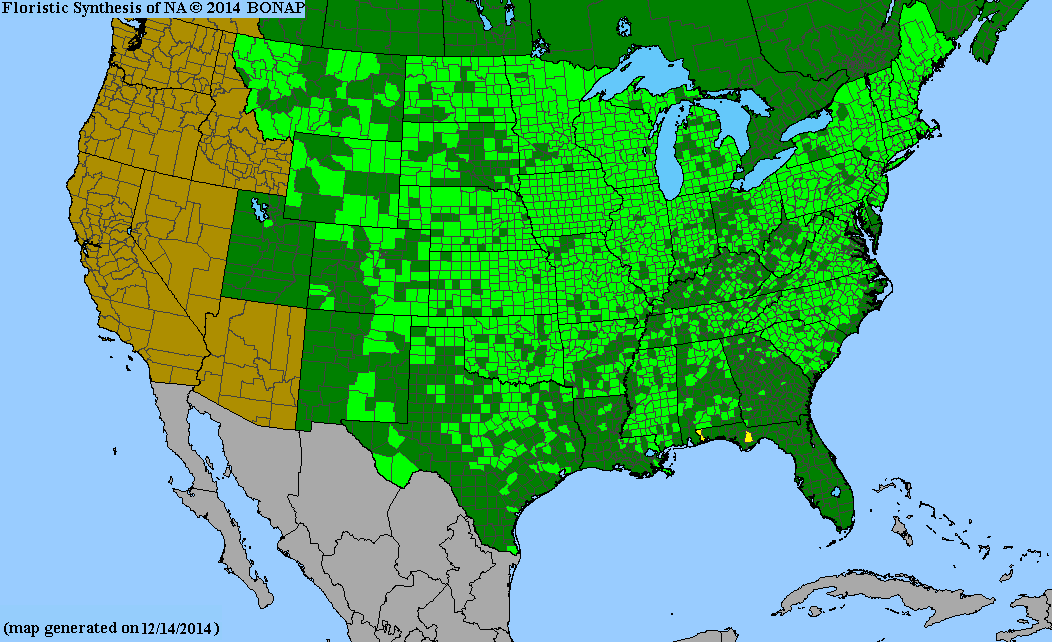
- Native Range: Northeast/Mid-Atlantic (full list) - native to all US states except Arizona
- Hydrology: Moist-Wet
- Root Depth: Moderate (12-24 in.)
- Salinity Tolerance: Low
- Growth Rate: Rapid
- Drought Tolerance: Moderate
- Deer Resistance: Yes (Rarely Damaged) (genus (Solidago) listed directly on a formal landscape deer-resistance reference)
- Flood Tolerance: High - Tolerates some flooding in spring and performs best with consistent moisture; natural habitats include floodplain forest openings, swamps in major river floodplains, wet prairies, and shorelines. Notably less tolerant of salinity than seaside goldenrod, and absent from coastal areas exposed to salt spray.
- Shade Tolerance: Intolerant
- Growth Habit: Spreading - rhizomatous
- USDA Hardiness Zones: 3-8
- Pollinator Value: Supports bees, supports butterflies
Planting Guidance
- Spreads quickly by creeping rhizomes and self-seeding to form dense colonies; blooms earlier than most other goldenrods, sometimes beginning as early as July. Adaptable to drier conditions once established.
Share