Spartina patens (Salt Meadow Cordgrass)
Spartina patens (Salt Meadow Cordgrass)
Wholesale to the Trade - Please log into your business account.
Wholesale to the Trade - Please log into your business account.
Couldn't load pickup availability
More information on the 2027 crop to come
A genuine low-profile workhorse of the high marsh, salt meadow cordgrass's dense, wiry mat-forming habit makes it an especially effective erosion-control species - protecting shorelines while providing critical habitat for marsh crabs, birds, and fish in the drier, less frequently flooded zones smooth cordgrass can't occupy.
Species Overview
Spartina patens, commonly called salt meadow cordgrass or saltmeadow hay, is a low-growing, salt-tolerant perennial grass native to coastal marshes and dunes along the Atlantic and Gulf coasts. It forms dense mats of wiry, fine-textured foliage that distinguish it from the taller, more robust smooth cordgrass it often grows alongside in the high marsh zone.
Application
- High marsh and coastal dune erosion control - dense mat-forming habit
- Shoreline protection plantings
- Habitat for marsh crabs, birds, and fish
- Salt-hay meadow restoration and mixed-marsh plantings alongside smooth cordgrass
Growing Conditions / Specification Data
- Light: Full Sun
- Soil/Moisture Tolerance: Saline soils; coastal marshes and dunes
- Plant Type: Graminoid
- Mature Height: 1-2 ft.
- Fall Color: Insignificant/None
- Wetland Indicator Status: NI (No Indicator) - see flags
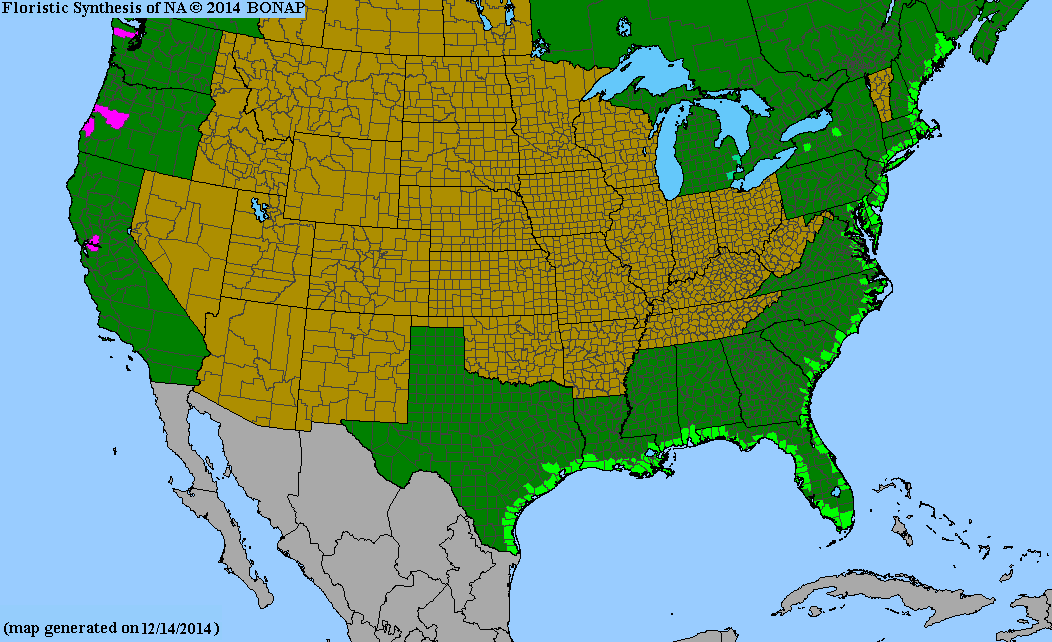
- Native Range: Northeast/Mid-Atlantic (full list)
- Pollinator Value: None significant - wind-pollinated salt marsh grass, no meaningful nectar or pollen resource.
- Hydrology: Moist-Wet
- Root Depth: Deep (24-36 in.)
- Growth Rate: Rapid
- Drought Tolerance: Low
- Deer Resistance: Yes (Rarely Damaged)
- Shade Tolerance: Intolerant
- Salinity Tolerance: High - documented healthy growth at 0-15 ppt in field trials, tolerance extending to 30 ppt (peer-reviewed population studies)
- Flood Tolerance: High - A dominant grass of the regularly-flooded high salt marsh zone, consistent with this species' already-confirmed high salinity tolerance and salt marsh habitat from earlier work.
- Growth Habit: Spreading - rhizomatous
- USDA Hardiness Zones: 4-9
Planting Guidance
- Often grown in combination with smooth cordgrass (Spartina alterniflora) and big cordgrass (Spartina cynosuroides) in mixed high-marsh and salt-hay restoration plantings; historically harvested as "salt hay" for mulch and livestock bedding.
Share