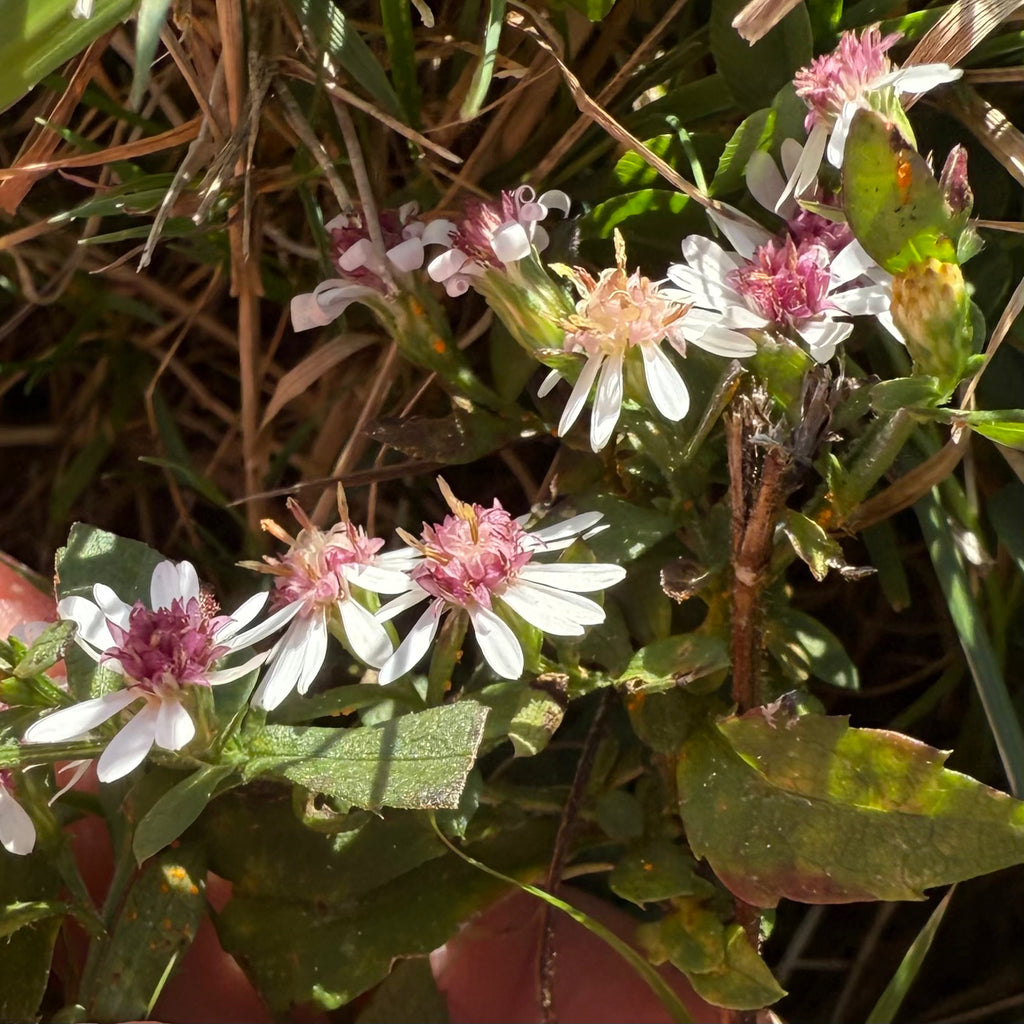
Symphyotrichum lateriflorum (Calico Aster)
Symphyotrichum lateriflorum (Calico Aster)
Wholesale to the Trade - Please log into your business account.
Wholesale to the Trade - Please log into your business account.
Couldn't load pickup availability
A genuinely exceptional ecological anchor even among asters, calico aster is documented as a host plant for 112 species of Lepidoptera larvae, including the specialist aster flowerhead moth, aster-head phaneta, and Hoffman's cochlid moths alongside the Silvery Checkerspot and Pearl Crescent butterflies - and it serves as a critical fall food source for over 100 species of bees, flies, wasps, moths, butterflies, and beetles.
Species Overview
Symphyotrichum lateriflorum, commonly called calico or side-flowering aster, is a bushy perennial wildflower native to the eastern half of North America, growing 2 to 4 feet tall with horizontally spreading branches. Small white flowerheads with disk centers that shift from yellow to deep red or purple with age - giving individual clusters a multicolored, "calico" appearance - bloom prolifically from late summer into fall.
Application
- Exceptional larval host habitat - 112 documented Lepidoptera species
- Critical fall food source for 100+ bee, fly, wasp, moth, butterfly, and beetle species
- Shady woodland, rain garden, and pollinator plantings
- Monarch and bumble bee queen fall fueling habitat ahead of migration/hibernation
Growing Conditions / Specification Data
- Light: Part Shade (tolerates full sun with consistently moist soil)
- Soil/Moisture Tolerance: Moist to dry, well-drained soils, including clay; tolerates occasional flooding
- Drought Tolerance: Moderate
- Flood Tolerance: Moderate - A shade-tolerant aster rated FAC-leaning on wetland indicator status per earlier work, consistent with a wetland-adjacent habitat.
- Plant Type: Forb
- Mature Height: 2-4 ft.
- Fall Color: Insignificant/None
- Bloom Color / Period: White; September-November
- Wetland Indicator Status: FAC (Facultative)
- Native Range: Northeast/Mid-Atlantic (full list)
- Hydrology: Mesic-Moist
- Root Depth: Shallow (Under 12 in.)
- Salinity Tolerance: Low
- Growth Rate: Rapid
- Deer Resistance: Some
- Shade Tolerance: Tolerant
- Growth Habit: Spreading - rhizomatous
- USDA Hardiness Zones: 3-8
- Pollinator Value: Larval host, supports bees, supports specialist/oligolectic bees, supports butterflies, supports moths
Planting Guidance
- Spreads by self-seeding and roots to form clumps and large colonies; pinching back stem tips in early summer promotes a bushier, more compact form.
Share