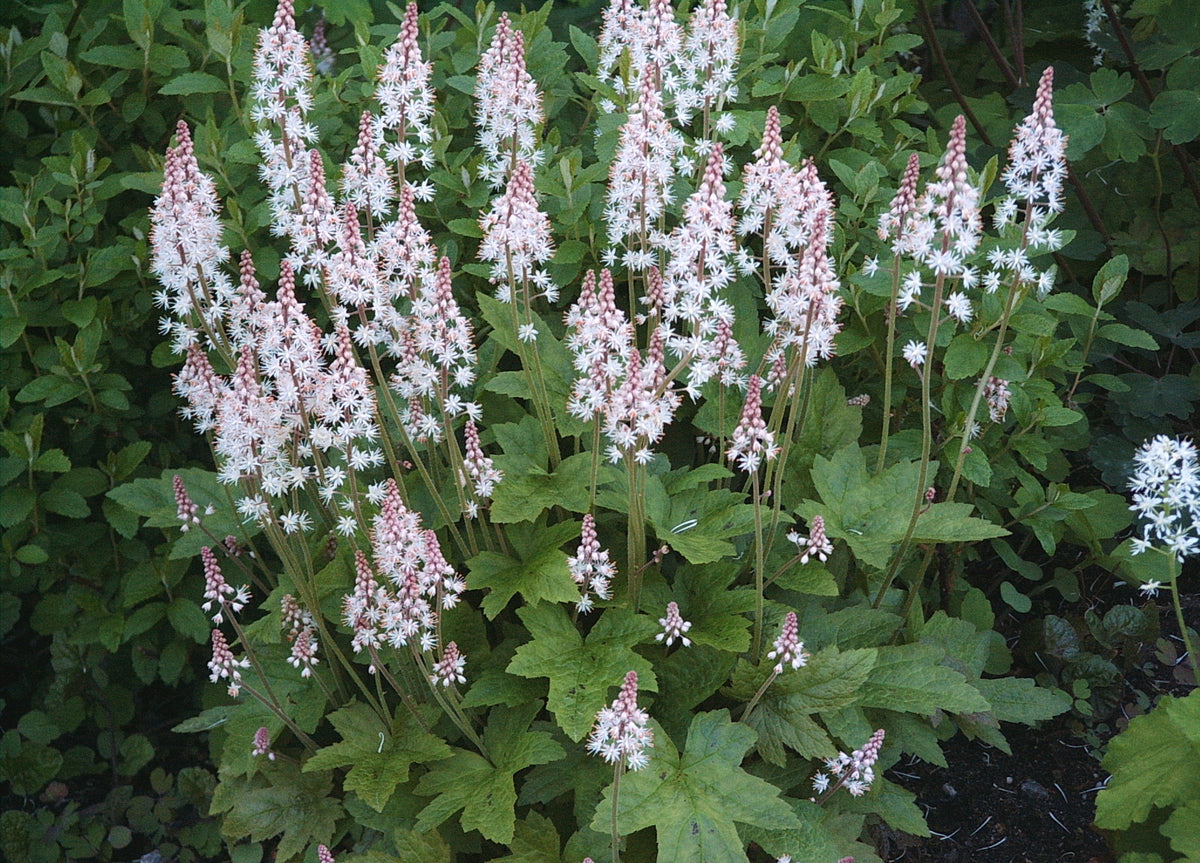
Tiarella cordifolia (Foam-Flower)
Tiarella cordifolia (Foam-Flower)
Wholesale to the Trade - Please log into your business account.
Wholesale to the Trade - Please log into your business account.
Couldn't load pickup availability
Recipient of the Royal Horticultural Society's Award of Garden Merit and a former North Carolina Wildflower of the Year, foamflower is a genuine shade-garden workhorse whose airy spring blooms draw early-season bees, pollinating flies, moths, and butterflies before most other woodland wildflowers have even emerged.
Species Overview
Tiarella cordifolia, or foamflower, is a stoloniferous, clump-forming perennial native to woodlands and forests of eastern North America, growing about 1 foot tall and spreading 1 to 2 feet wide. Heart-shaped, lobed, semi-evergreen foliage is topped by starry, creamy-white flowers on airy racemes in mid to late spring, often tinged with pink.
Application
- Woodland groundcover and shade garden plantings - quickly forms dense colonies
- Early-season pollinator habitat - bees, flies, moths, and butterflies
- Erosion control on shaded slopes
- Rock garden, fairy garden, and mixed shade container plantings
Growing Conditions / Specification Data
- Light: Part Shade to Full Shade
- Soil/Moisture Tolerance: Cool, moist, humus-rich, well-drained soil
- Plant Type: Forb
- Mature Height: 1-2 ft.
- Fall Color: Red - semi-evergreen, reddish-bronze in cooler climates
- Bloom Color / Period: White, Pink; April-June
- Wetland Indicator Status: FAC (Facultative)
- Native Range: Northeast/Mid-Atlantic (full list)
- Hydrology: Mesic-Moist
- Root Depth: Shallow (Under 12 in.)
- Salinity Tolerance: Low
- Growth Rate: Rapid
- Drought Tolerance: Low
- Deer Resistance: Yes (Rarely Damaged)
- Flood Tolerance: Moderate - A moist woodland groundcover, not a true wetland obligate; tolerates periodically wet soil.
- Shade Tolerance: Tolerant
- Growth Habit: Spreading - stoloniferous
- USDA Hardiness Zones: 3-9
- Pollinator Value: Supports bees, supports butterflies, supports moths
Planting Guidance
- Recipient of the Royal Horticultural Society's Award of Garden Merit; selected as the 1986 North Carolina Wildflower of the Year. Spreads rapidly by stolons to form dense colonies, making an excellent living-mulch groundcover; removal of flower spikes after bloom improves foliage appearance.
Share