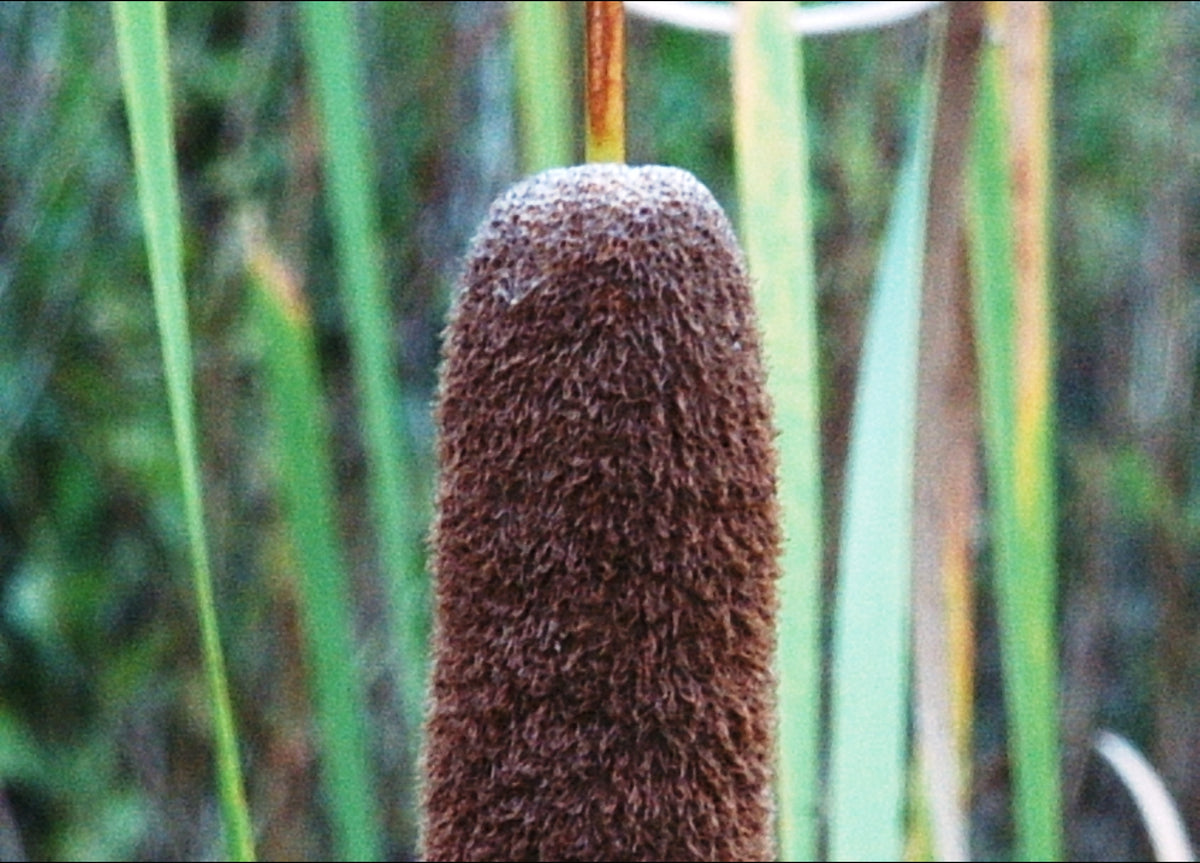
Typha angustifolia (Narrowleaf Cattail)
Typha angustifolia (Narrowleaf Cattail)
Wholesale to the Trade - Please log into your business account.
Wholesale to the Trade - Please log into your business account.
Couldn't load pickup availability
A genuinely versatile brackish-water specialist confirmed tolerant of both salt and road de-icing runoff, narrowleaf cattail is widely used for water filtration and wetland restoration - though its native status in North America is disputed, and it's worth knowing this species can become invasive in some regions.
Species Overview
Typha angustifolia, commonly called narrowleaf cattail, is an emergent aquatic perennial found in fresh to brackish wetlands across North America, growing 4 to 8 feet tall with narrow, strap-like leaves distinctly slimmer than the related broadleaf cattail. Its characteristic cylindrical brown flower spikes appear from May through July, with the male and female portions separated by a visible gap of naked stem.
Application
- Brackish marsh and salt-affected wetland restoration - confirmed salt tolerant
- Water filtration and stormwater treatment plantings
- Roadside ditch naturalization - tolerates de-icing salt runoff
- Freshwater to brackish transitional habitat restoration
Growing Conditions / Specification Data
- Light: Full Sun
- Soil/Moisture Tolerance: Wet soils; fresh to brackish water, muddy conditions
- Plant Type: Graminoid
- Mature Height: 4-8 ft.
- Fall Color: Insignificant/None
- Wetland Indicator Status: NI (No Indicator) - see flags
- Native Range: Northeast/Mid-Atlantic (full list) - see flags on disputed native status
- Pollinator Value: None significant - wind-pollinated emergent wetland grass, no meaningful nectar or pollen resource.
- Hydrology: Moist-Wet
- Root Depth: Shallow (Under 12 in.)
- Growth Rate: Rapid (confirmed genus-wide via T. latifolia's peer-reviewed flood-tolerance study from earlier work)
- Drought Tolerance: None
- Deer Resistance: Some
- Shade Tolerance: Intolerant
- Salinity Tolerance: Moderate
- Flood Tolerance: High - A wetland-obligate cattail, consistent with the genus' documented dominance under constant flooding conditions in peer-reviewed comparative flood-tolerance research.
- Growth Habit: Spreading - rhizomatous
- USDA Hardiness Zones: 3-8
Planting Guidance
- IMPORTANT: native status in North America is disputed - some sources treat it as native, others as introduced from Eurasia. IMPORTANT: This species is documented as able to "become invasive in some regions" - site with care and monitor spread. Hybridizes with the native Typha latifolia to form the vigorous, often more aggressive hybrid Typha x glauca.
Share