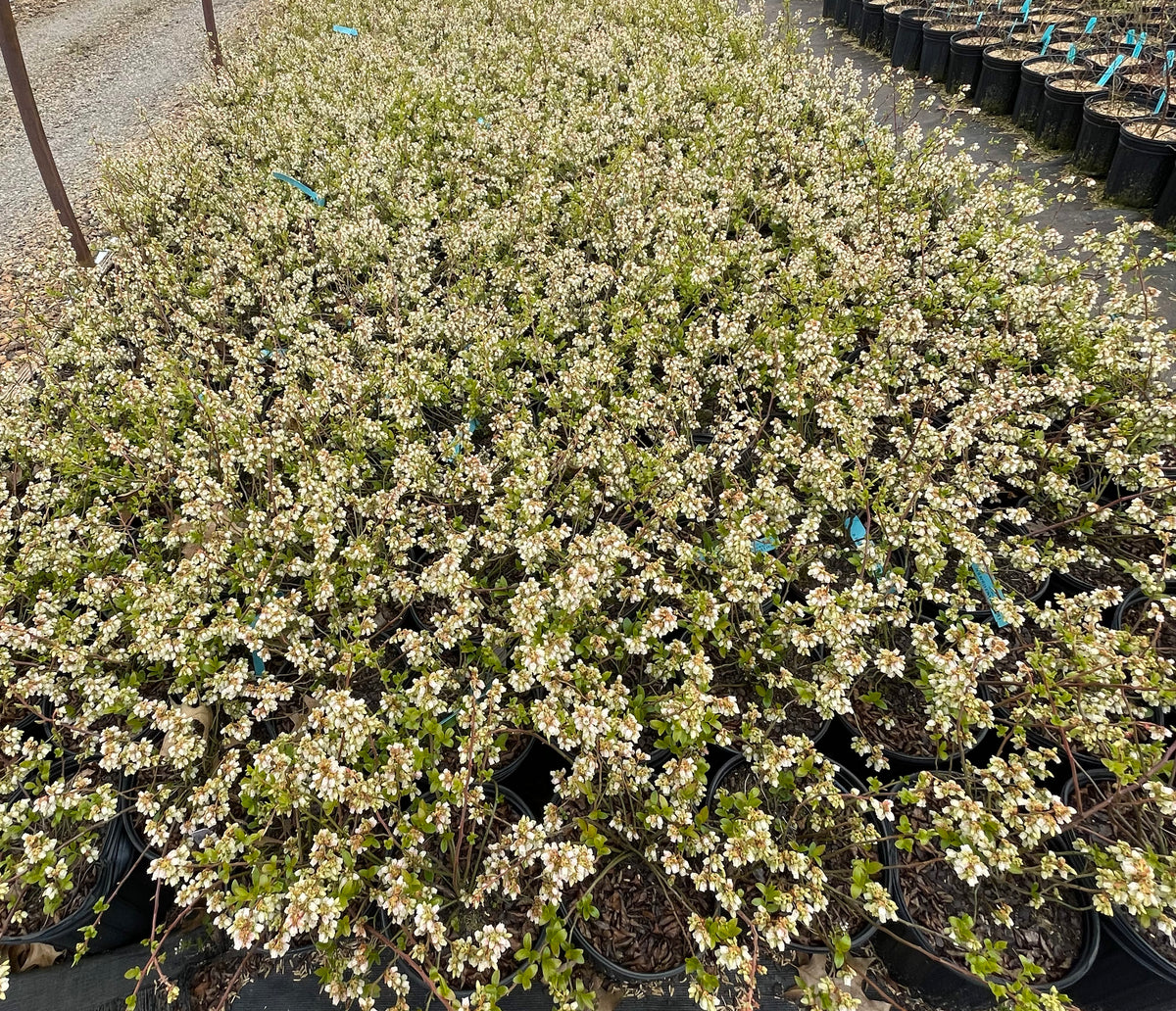
Vaccinium angustifolium (Lowbush Blueberry)
Vaccinium angustifolium (Lowbush Blueberry)
Wholesale to the Trade - Please log into your business account.
Wholesale to the Trade - Please log into your business account.
Couldn't load pickup availability
More information on the 2027 crop to come
A genuine keystone species confirmed fire-tolerant and rhizomatous, lowbush blueberry is the leading source of commercially harvested wild blueberries in North America - and its ability to colonize even severely disturbed sites, including mine tailings, makes it a proven tool for revegetating the toughest reclamation projects.
Species Overview
Vaccinium angustifolium, or lowbush blueberry, is a low, open-growing, colony-forming deciduous shrub native to dry, acidic, sandy or rocky sites across eastern North America, typically growing 1 to 2 feet tall. Small, white to pink-tinged, bell-shaped flowers bloom in spring, followed by sweet, edible blue berries in summer above foliage that turns brilliant bronze, scarlet, and crimson in fall.
Application
- Reclamation and revegetation on severely disturbed sites, including mine tailings
- Fire-adapted barrens and open-woods restoration - keystone species
- Dry, sandy, acidic groundcover plantings
- Wildlife and edible-landscape plantings - commercial-grade wild blueberries
Growing Conditions / Specification Data
- Light: Full Sun to Part Shade
- Soil/Moisture Tolerance: Acidic, well-drained, average soils; sandy or rocky
- Plant Type: Shrub
- Mature Height: 1-2 ft.
- Fall Color: Yellow, Orange, Red
- Bloom Color / Period: White, Pink; April-May
- Wetland Indicator Status: NI (No Indicator) - see flags
- Native Range: Northeast/Mid-Atlantic (full list)
- Pollinator Value: Supports bees, supports specialist/oligolectic bees - reproduction is closely tied to insect pollination since this species is self-incompatible; specialist bees including Andrena carolina and Andrena bradleyi have a documented near-exclusive relationship with this genus, alongside bumblebees.
- Hydrology: Mesic-Moist
- Root Depth: Shallow (Under 12 in.) (blueberries are well-documented as shallow, fibrous-rooted)
- Salinity Tolerance: Low
- Growth Rate: Slow
- Drought Tolerance: Low (shallow roots limit access to deep soil moisture)
- Deer Resistance: No (Frequently Damaged) (blueberry foliage and stems are commonly browsed by deer)
- Flood Tolerance: Low - A cold-hardy species of acidic, well-drained soil; not a wetland obligate.
- Shade Tolerance: Intermediate
- Growth Habit: Spreading - rhizomatous
- USDA Hardiness Zones: 2-6
Planting Guidance
- Fire-tolerant and rhizomatous - a common colonizer of open ground that regenerates readily after burning. The leading commercial source of wild (as opposed to cultivated highbush) blueberries in North America.
Share