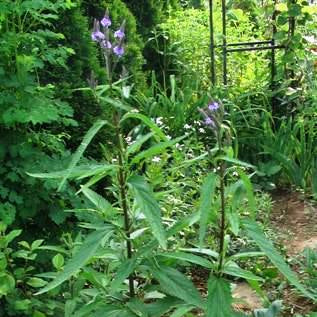
Verbena hastata (Blue Vervain)
Verbena hastata (Blue Vervain)
Wholesale to the Trade - Please log into your business account.
Wholesale to the Trade - Please log into your business account.
Couldn't load pickup availability
More information on the 2027 crop to come
A confirmed salt- and flood-tolerant species genuinely at home in bioswales and roadside rain gardens, blue vervain is a documented larval host for the Verbena Moth and Common Buckeye butterfly, and serves as an important food source for the specialist bee Calliopsis nebraskensis.
Species Overview
Verbena hastata, or blue vervain, is an erect, biennial-to-short-lived-perennial wildflower native to wet meadows, marshes, and stream banks across North America, growing 2 to 4 feet tall on stiff, square stems. Dense, candelabra-like spikes of deep blue-violet flowers bloom from the bottom upward from midsummer through fall.
Application
- Bioswale, roadside rain garden, and salt-affected soil restoration
- Larval host habitat for the Verbena Moth and Common Buckeye butterfly
- Specialist bee habitat (Calliopsis nebraskensis)
- Wet meadow, pond margin, and streambank stabilization
Growing Conditions / Specification Data
- Light: Full Sun to Part Shade
- Soil/Moisture Tolerance: Wet, fertile loam preferred; tolerates average-moisture soils and moderate salt levels
- Plant Type: Forb
- Mature Height: 2-4 ft.
- Fall Color: Insignificant/None
- Bloom Color / Period: Purple; July-September
- Wetland Indicator Status: NI (No Indicator) - see flags
- Native Range: Northeast/Mid-Atlantic (full list)
- Hydrology: Moist-Wet
- Root Depth: Moderate (12-24 in.)
- Salinity Tolerance: Low
- Growth Rate: Moderate
- Drought Tolerance: Low
- Deer Resistance: Some
- Flood Tolerance: High - Rated FACW+ (leaning Obligate Wetland) - usually occurs in wetlands.
- Shade Tolerance: Intermediate
- Growth Habit: Upright
- USDA Hardiness Zones: 3-8
- Pollinator Value: Larval host, supports bees, supports specialist/oligolectic bees, supports butterflies, supports moths
Planting Guidance
- Flood tolerant and useful for stream bank stabilization; can handle occasional road salt runoff and urban roadside conditions, making it a popular choice for bioswales and parking-lot rain gardens. Bitter foliage is largely unpalatable to herbivores, though tender young growth may be nibbled by cottontail rabbits.
Please allow 3 business days for all seed orders.
Share