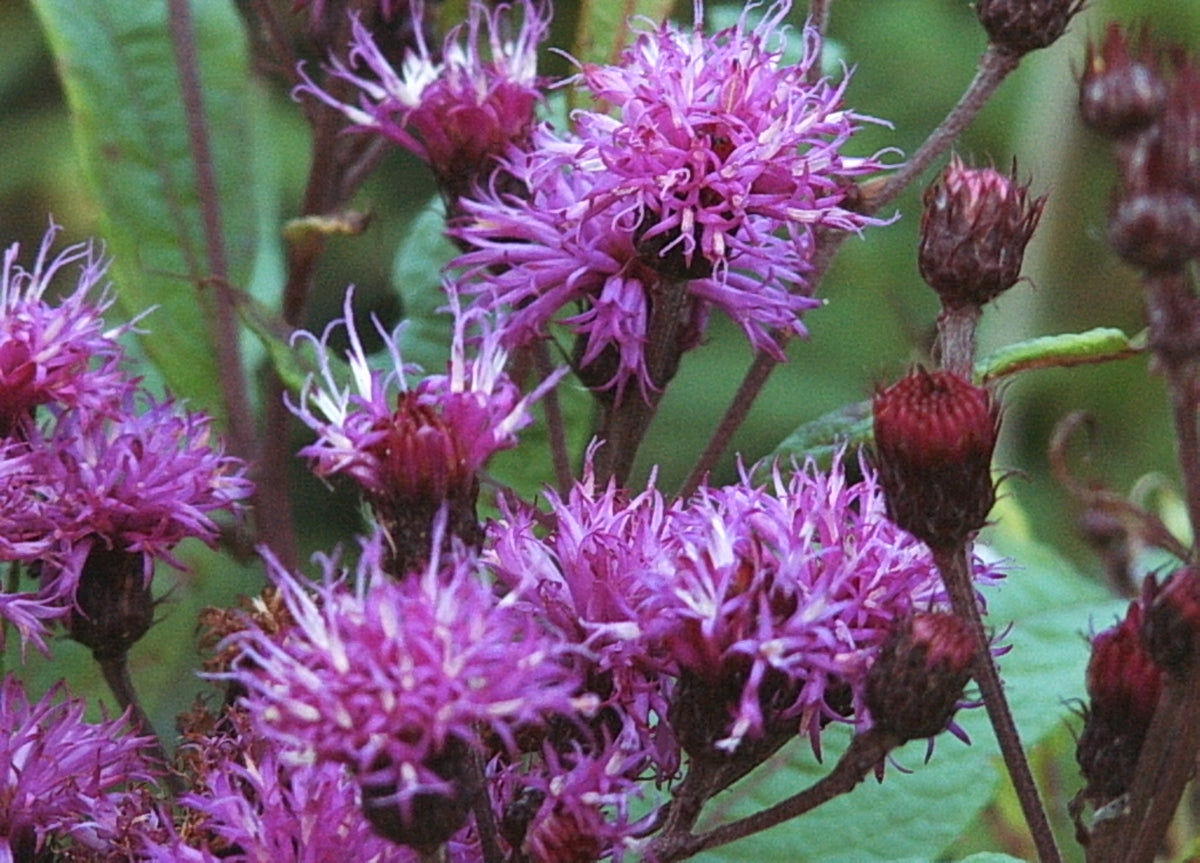
Vernonia noveboracensis (New York Ironweed)
Vernonia noveboracensis (New York Ironweed)
Wholesale to the Trade - Please log into your business account.
Wholesale to the Trade - Please log into your business account.
Couldn't load pickup availability
More information on the 2027 crop to come
Recognized as both the North Carolina 2004 Wildflower of the Year and Virginia's 1995 Wildflower of the Year, New York ironweed's hollow dead stems provide genuine nesting habitat for native bees - worth leaving standing through winter rather than cutting back in fall.
Species Overview
Vernonia noveboracensis, or New York ironweed, is a tall, coarse, upright perennial native to moist meadows, thickets, and streambanks primarily along the Mid-Atlantic coast, growing 4 to 8 feet tall. Fluffy clusters of deep purple to red-violet flowers bloom from midsummer into fall atop stiff, leafy stems, aging to a distinctive rusty-iron patina that gives the plant its common name.
Application
- Wet meadow, streambank, and freshwater marsh restoration
- Native bee stem-nesting habitat - leave dead stems standing through winter
- Late-season pollinator garden anchor plantings
- Naturalized border and rain garden plantings
Growing Conditions / Specification Data
- Light: Full Sun to Part Shade
- Soil/Moisture Tolerance: Rich, moist, acidic soils preferred; tolerates average to dry conditions once established
- Plant Type: Forb
- Mature Height: 4-8 ft.
- Fall Color: Insignificant/None
- Bloom Color / Period: Purple; July-October
- Wetland Indicator Status: NI (No Indicator) - see flags
- Native Range: Northeast/Mid-Atlantic (full list)
- Hydrology: Moist-Wet
- Root Depth: Moderate (12-24 in.)
- Salinity Tolerance: Low
- Growth Rate: Moderate
- Drought Tolerance: Low
- Deer Resistance: Yes (Rarely Damaged)
- Flood Tolerance: High - Rated FACW+ (leaning Obligate Wetland) - usually occurs in wetlands.
- Shade Tolerance: Intermediate
- Growth Habit: Upright
- USDA Hardiness Zones: 5-9
- Pollinator Value: Supports bees, supports butterflies, supports moths
Planting Guidance
- 2004 North Carolina Wildflower of the Year and 1995 Virginia Wildflower of the Year. Cut back dead stems to 12-24 inches and leave them standing rather than removing entirely - native bees nest in the hollow stems over winter.
Please allow 3 business days for all seed orders.
Share