Viburnum acerifolium (Mapleleaf Viburnum)
Viburnum acerifolium (Mapleleaf Viburnum)
Wholesale to the Trade - Please log into your business account.
Wholesale to the Trade - Please log into your business account.
Couldn't load pickup availability
Voted the Georgia Native Plant Society's 2011 Plant of the Year and confirmed highly drought tolerant, mapleleaf viburnum is a documented larval host for the Spring Azure butterfly and one of the most shade-tolerant viburnums available - a genuine understory specialist too often overlooked in the nursery trade.
Species Overview
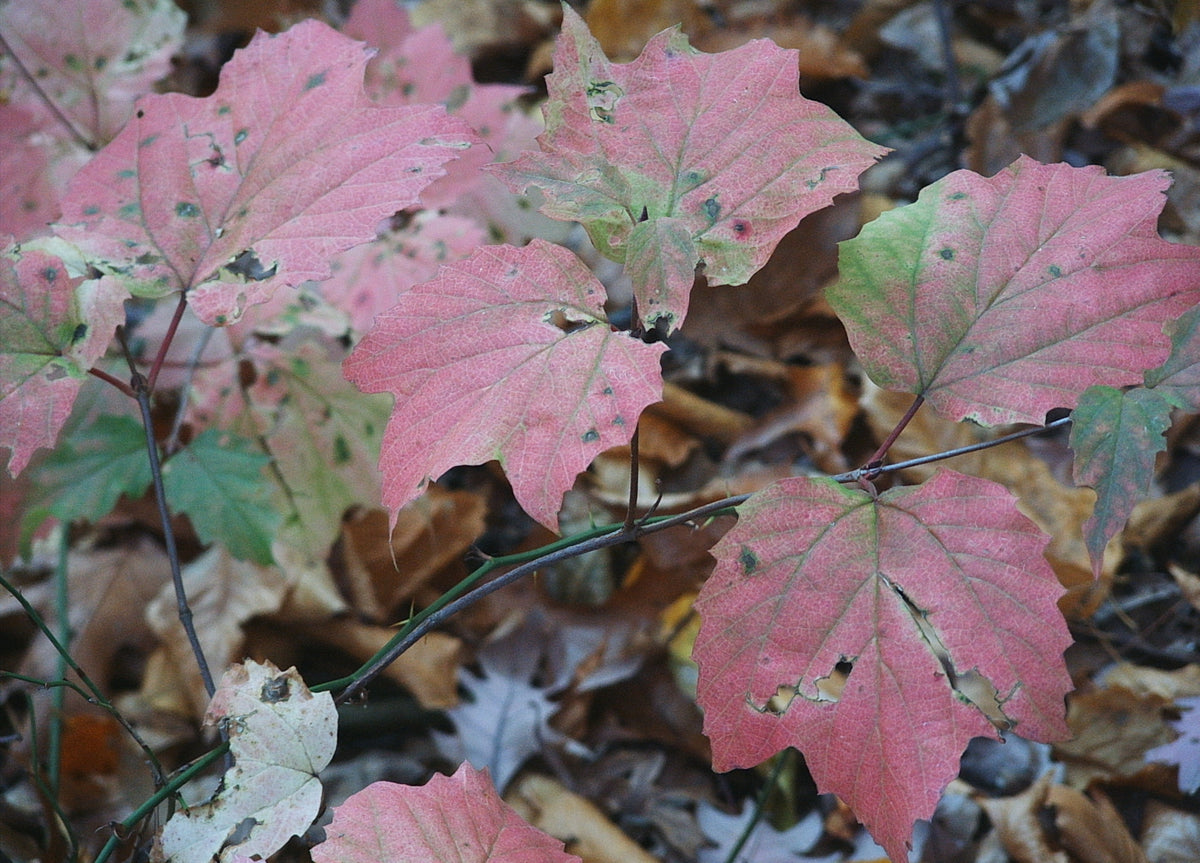
Viburnum acerifolium, or mapleleaf viburnum, is a small, suckering, deciduous woodland shrub native to eastern North America, typically growing 3 to 6 feet tall. Maple-shaped, three-lobed leaves give the species its common name, with flat-topped clusters of tiny white flowers in late spring giving way to blue-black berries and brilliant reddish-purple to magenta fall foliage.
Application
- Shaded woodland understory plantings - among the most shade-tolerant native viburnums
- Larval host habitat for the Spring Azure butterfly
- Dry, acidic woodland restoration - confirmed highly drought tolerant
- Naturalized colonizing plantings under mixed deciduous canopy
Growing Conditions / Specification Data
- Light: Full Sun to Full Shade
- Soil/Moisture Tolerance: Moist, acidic, well-drained soils; also tolerates dry, rocky soils
- Drought Tolerance: High
- Flood Tolerance: Low - A shade-tolerant, dry-mesic woodland understory shrub, not a wetland species.
- Plant Type: Shrub
- Mature Height: 4-8 ft.
- Fall Color: Red-Purple
- Bloom Color / Period: White; April-June
- Wetland Indicator Status: NI (No Indicator) - see flags
- Native Range: Northeast/Mid-Atlantic (full list)
- Hydrology: Dry-Mesic
- Root Depth: Moderate (12-24 in.)
- Salinity Tolerance: Low
- Growth Rate: Moderate
- Deer Resistance: Some (Rutgers rates the genus "seldom severely damaged")
- Shade Tolerance: Tolerant
- Growth Habit: Multi-stemmed/Thicket-forming - suckering
- USDA Hardiness Zones: 3-8
- Pollinator Value: Larval host, supports bees, supports butterflies
Planting Guidance
- 2011 Georgia Native Plant Society Plant of the Year. Requires a genetically distinct cross-pollinator (not a clone of the same plant) for good fruit set. Historically used by the Cherokee as an anticonvulsant and fever treatment, and by the Chippewa as an emetic and stomach-cramp remedy.
Share