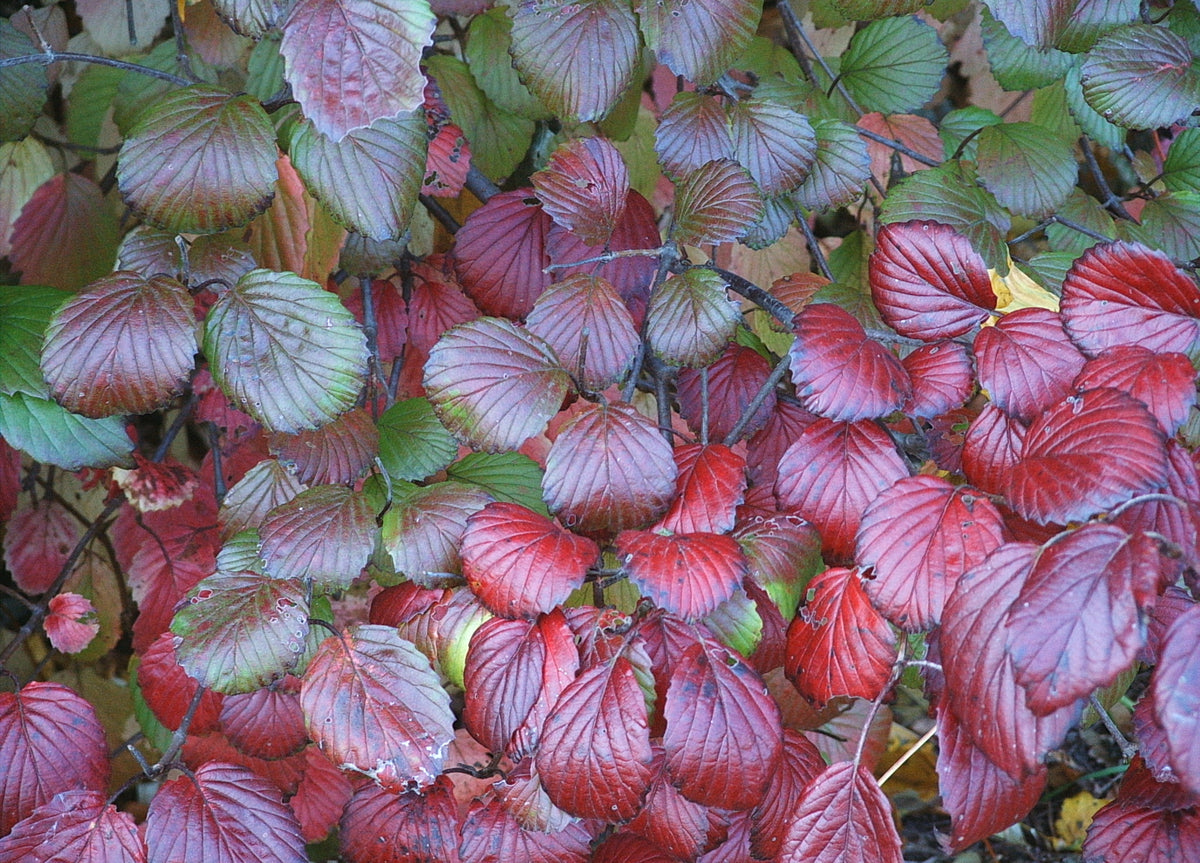
Viburnum dentatum (Arrowwood Viburnum)
Viburnum dentatum (Arrowwood Viburnum)
Wholesale to the Trade - Please log into your business account.
Wholesale to the Trade - Please log into your business account.
Couldn't load pickup availability
More information on the 2027 crop to come
More information on the 2027 crop to come
More information on the 2027 crop to come
A confirmed deer-resistant, winter-hardy generalist named for the straight shoots historically used to craft arrows, arrowwood viburnum is a documented larval host plant that provides nectar for native bees and food and shelter for birds - genuinely adaptable across moist to well-drained soils from forests to parking lot plantings.
Species Overview
Viburnum dentatum, or arrowwood viburnum, is a versatile deciduous shrub native to eastern North America, typically growing 6 to 12 feet tall. Flat-topped clusters of creamy-white flowers bloom in late spring, followed by dark blue-black berries, with glossy green foliage turning yellow, orange, or red in fall.
Application
- Hedge, screen, and mass planting - vigorous, sturdy growth
- Deer-pressured sites - confirmed deer resistant
- Larval host and native bee nectar habitat
- Streamside, pond-edge, and parking-lot restoration plantings
Growing Conditions / Specification Data
- Light: Full Sun to Part Shade
- Soil/Moisture Tolerance: Moist to well-drained soils; wide adaptability including wet sites
- Plant Type: Shrub
- Mature Height: 8-15 ft.
- Fall Color: Yellow, Orange, Red
- Bloom Color / Period: White; May-June
- Wetland Indicator Status: NI (No Indicator) - see flags
- Native Range: Northeast/Mid-Atlantic (full list)
- Hydrology: Mesic-Moist
- Root Depth: Moderate (12-24 in.)
- Salinity Tolerance: Low
- Growth Rate: Moderate
- Drought Tolerance: Moderate
- Flood Tolerance: Moderate - A moist thicket and wetland-margin shrub tolerant of periodically wet soil.
- Shade Tolerance: Intermediate
- Growth Habit: Multi-stemmed/Thicket-forming - suckering
- USDA Hardiness Zones: 3-8
- Deer Resistance: Yes (Rarely Damaged)
- Pollinator Value: Larval host, supports bees, supports butterflies
Planting Guidance
- Straight, slender branches were historically used by Indigenous peoples to make arrow shafts, giving the species its common name. Winter-hardy to USDA zone 2; watch for viburnum leaf beetle, which can defoliate stressed plants.
Share